


In this section, the NeoTires team guides you through every twist and turn of the tire-buying process. This category brings you expert advice to help you make informed decisions. Here you'll discover tips to choose the right tire size, understand seasonal needs, and decode tire-related terms and indexes to make the right choice. This guide teaches you how to improve your driving experience through fuel efficiency, tire longevity, and road safety tips. Whether you're upgrading for style, tackling off-road adventures, or preparing for diverse weather conditions, our tips will ensure you're always on the right track.
Published on: Monday, July 29, 2024 Last updated on: Monday, January 26, 2026
Tire performance depends on several factors such as tread design, internal construction, as well as the right size. These factors must complement each other for a highly-performant and safe use. Tread width is a crucial aspect in the context of tire size because it is one of those factors that determine the contact patch with the road, traction, and tire fuel efficiency.
Published on: Thursday, August 15, 2024 Last updated on: Monday, January 26, 2026
The debate between all-weather and all-season tires confuses many drivers when it comes to choosing the right tire type. Both types are often seen as synonyms. However, all-season and all-weather tires do have certain differences that make them more suitable for specific weather conditions. This section aims to shed light on the specifics of the 2 types of tires.
Published on: Monday, September 2, 2024 Last updated on: Monday, January 26, 2026
Correctly interpreting your vehicle’s wheel size is crucial for its safety and optimal performance. In this section, we will address this subject, particularly the rim size, which is an indispensable component of this topic. At the end of the article, you should know better why wheel and rim sizes matter, their particularities, and how should drivers choose the right size for the best vehicle performance.
Published on: Thursday, September 19, 2024 Last updated on: Monday, January 26, 2026
Load Range E tires are heavy-duty tire models built with reinforced internal construction to handle higher air pressures and heavier loads. E range tires typically support up to 80 psi (550 kPa) and carry a maximum load of about 3,000–3,750 lbs (1,360–1,700 kg) per tire, depending on the tire’s specific size. This article focuses in particular on the tire E load rating, also known as the load range E, which is a crucial indicator of the tire's ability to support the extra load.
Published on: Monday, September 30, 2024 Last updated on: Monday, January 26, 2026
The most popular tires are 225, 245, and 265 mm in tread width. These tire sizes share many common aspects, so drivers face difficulty choosing the correct size. As a rule, these sizes are specific to passenger vehicles and SUVs. The right size is one of the most essential aspects of choosing the right tires. Once you know what makes them different, you will know whether it is a good idea to interchange them and what the potential benefits or side effects are. So, let's hit the road, shall we?
Published on: Monday, September 30, 2024 Last updated on: Monday, January 26, 2026
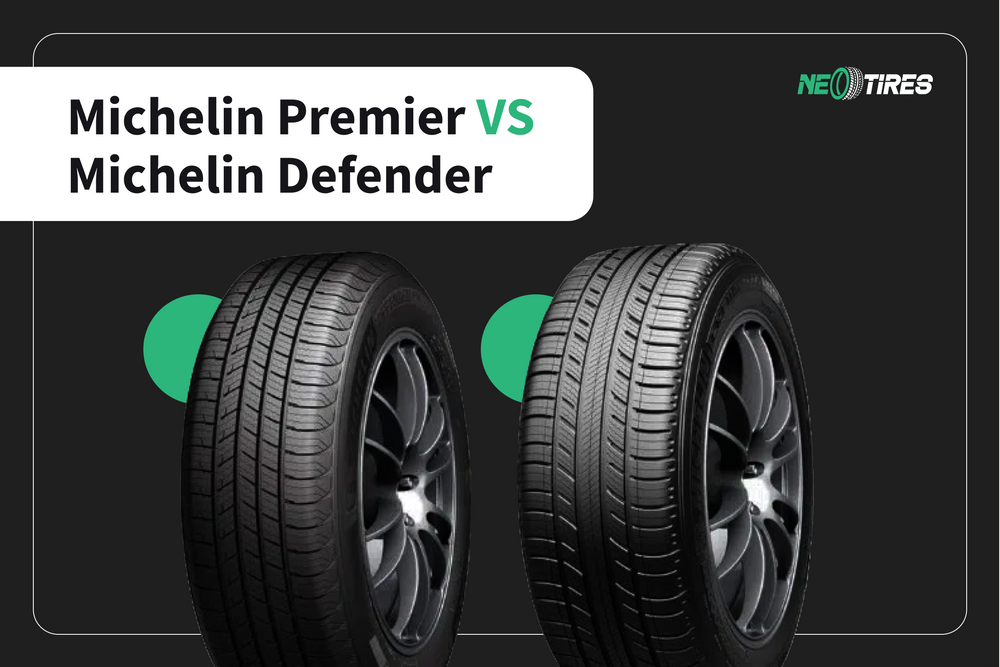
If you are at the crossroads of choosing between Michelin Premier and Defender this blog might be useful and interesting for you. All seasons tires are very popular due to their practicability and no need to be changed every season. With a lifespan of over 60,000-80,000 miles, they do their job for years.
Published on: Monday, March 10, 2025 Last updated on: Monday, January 26, 2026
A vehicle's tires do far more than move it forward on the road. They are the foundation that determines its performance and safety in various terrains and weather conditions. Today, we talk about How To Buy Tires. When a driver buys new tires, the choice is not just about price - it's about traction, comfort, grip, and fuel efficiency. This Tire-Buying Guide teaches you how to buy the right tires from the many products available.
Published on: Monday, August 25, 2025 Last updated on: Thursday, December 18, 2025
The best truck tires for winter, when deep snow and ice present a challenge, are winter-specific tires that feature the 3-Peak Mountain Snowflake (3PMSF) symbol, indicating that the tires are designed to deliver maximum grip on snowy and icy surfaces. 3PMSF-rated truck tires feature optimized tread patterns and special rubber that resists freezing temperatures.
Published on: Thursday, September 4, 2025 Last updated on: Wednesday, November 26, 2025
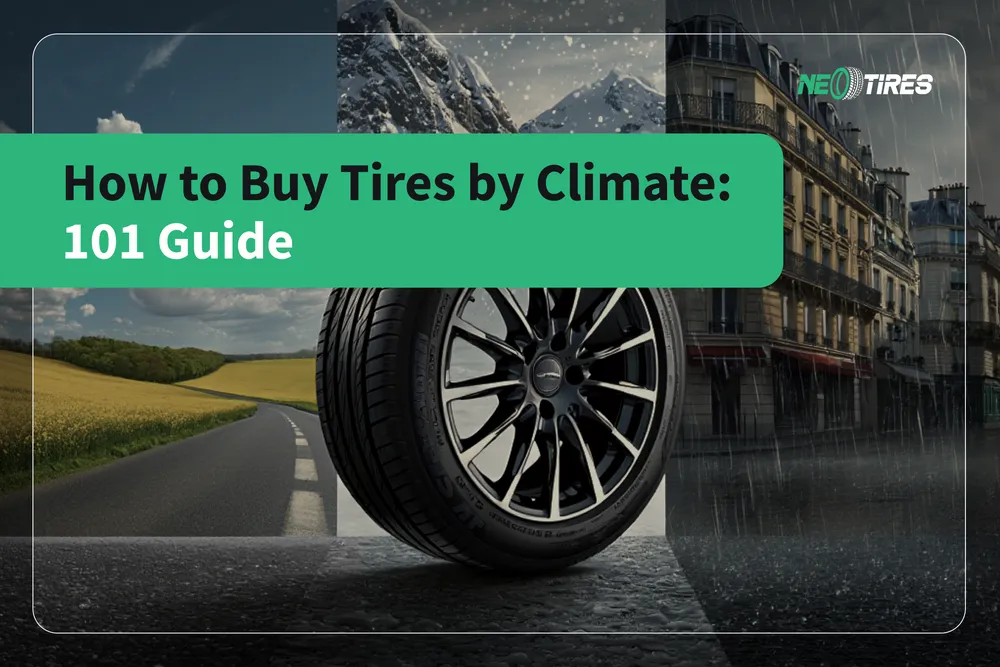
The climate in which you typically drive is one of the main factors that influence tire performance. Diverse climate conditions, such as dry or wet, hot or cold, impact tire longevity, braking distance, handling, and grip on various road surfaces. The rubber formula in different types of tires, such as summer, all-season, or winter tires, responds differently to temperature changes.
Published on: Thursday, December 11, 2025 Last updated on: Tuesday, December 23, 2025
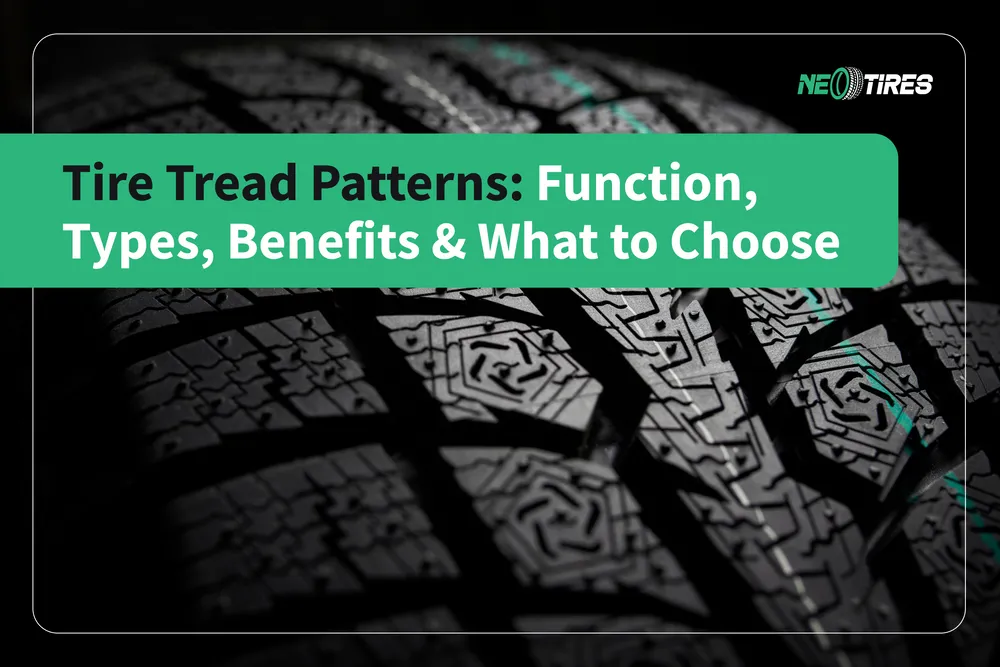
Tire tread designs are vital for safety, performance, and efficiency. Whether on wet highways or snowy backroads, the interaction between a tire and the road surface affects grip, stopping distance, handling, and even fuel consumption. In this guide, we outline the primary tread patterns and discuss how they influence traction, noise levels, and fuel efficiency. We also offer practical advice on selecting the appropriate tire for your vehicle and driving environment.
Need live support?
- Mon - Fri: 8am - 7pm ET
- Sat: 9am - 5pm ET
- Sun: Closed
Customer service
Special offers
Tire sizes
Vehicles
Join our mailing list
Subscribe for updates and promotions.
Wait...