


Does It Matter What Tires You Buy?
A vehicle's tires do far more than move it forward on the road. They are the foundation that determines car performance and safety in various terrains and weather conditions. Today, we talk about How To Buy Tires. When a driver buys new tires, the choice is not just about price - it's about traction, comfort, grip, and fuel efficiency.
This Tire-Buying Guide teaches you how to buy the right tires from the many products available. Buying the right tires can be difficult, considering the vast number of brands, types, and technical specifications. This guide simplifies the process, ensuring you get the best fit for your driving needs and vehicle demands.
1. Understanding Tire Basics
Tire Size Explained: What Do Tire Numbers Mean?
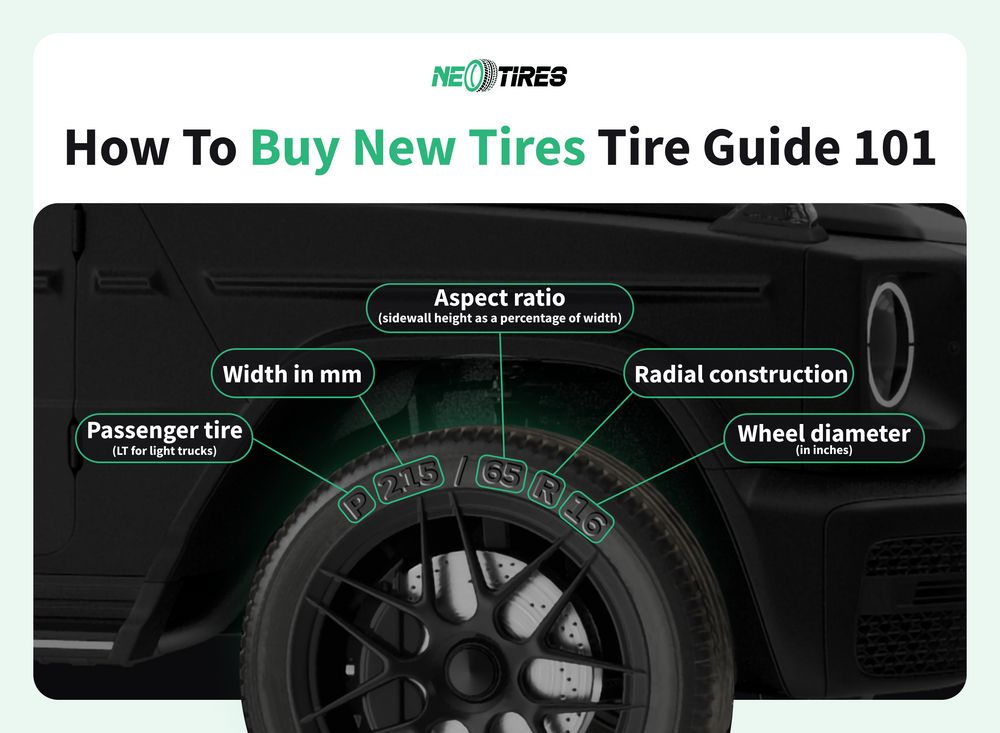
Every tire has a sequence of markings on its sidewall. This sequence contains essential information for the driver when buying tires, such as the type of tire, its width, the ratio of height to width (aspect ratio), the type of tire construction, and the wheel diameter.
When you buy new tires, please ensure they are close to the size of your existing tires. We recommend not making significant changes in tire size to avoid potential handling issues, braking issues, suspension damage, or premature tire wear.
Here is what tire markings mean on a tire example with P215/65R16 size:
Tire Speed & Load Ratings
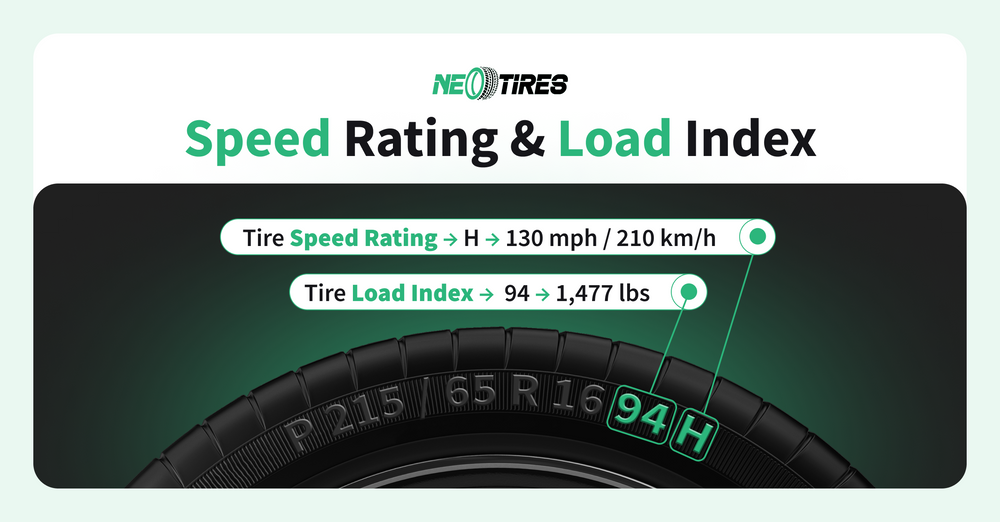
The tire speed rating on its sidewall tells you the maximum speed the tire can safely handle. The higher the speed rating (Z, W, Y), the better the vehicle's grip and brakes. However, the trade-off for this benefit is lower tread life.
Drivers can always choose a higher tire speed rating when buying tires. However, they can only decrease it if the vehicle's top speed is reduced to match the selected tire rating.
The tire load index shows the weight a tire can safely carry. This number usually varies from 70 to 126, corresponding to a load capacity of 739 to 3,748 lbs.
If drivers are used to carrying heavy loads with their vehicles, they should opt for tires with a higher load rating. If the tire's load rating doesn't match the vehicle's weight, the tire will wear quickly, possibly putting the driver's safety at risk (tire premature failure or blowout).
Tire Tread Patterns
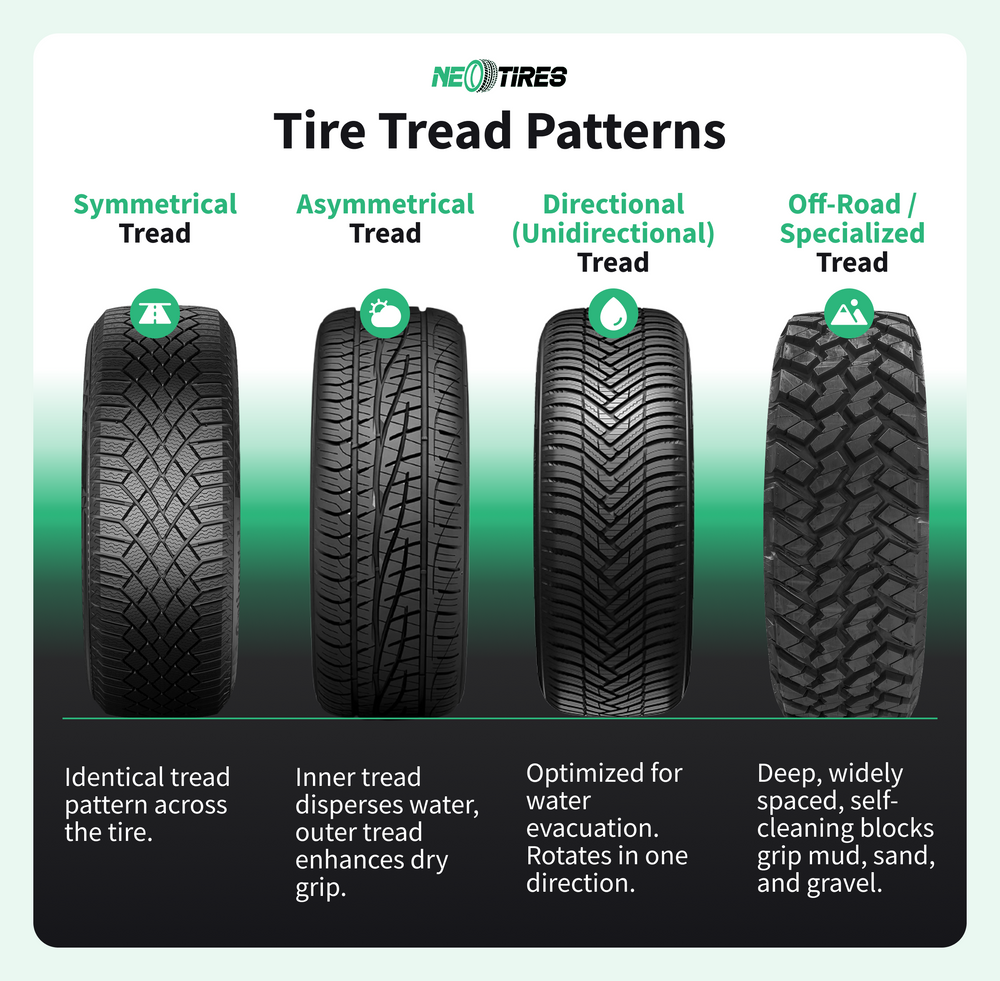
Tire treads are designed to meet specific drivers' needs and weather conditions. When buying the right tires, consider three types of tread patterns: asymmetrical, symmetrical, and directional.
Asymmetric tires deliver balanced performance in dry and wet conditions. The Continental Extreme Contact DW is a good example. It is an optimal solution for drivers who need balance, control, and stability in mixed weather conditions (wet and dry).
Symmetric tire treads are about fuel efficiency, long tread life, and quietness. The Bridgestone Ecopia H/L 422 Plus is a good example. This product's symmetrical design delivers high directional stability, a steady grip on dry surfaces, and low rolling resistance.
Directional tire treads provide superb wet handling and high-speed stability. They are optimal for situations requiring extra traction, such as snow and mud.
The Michelin XICE X13 and Goodyear Ultra Grip® Ice WRT are good examples of directional tires. Their directional design ensures high protection against aquaplaning, superb snow handling, and steady control at high speeds.
Different manufacturers prioritize different driving needs, vehicle types, and market segments. See how tire brands compare in our Tire Brands Explained article.
2. How to Choose The Right Tires
When choosing new tires, drivers are advised to consider the following:
- Driving Style and Road Conditions
All-season and/or touring tires are a good choice for drivers who prioritize fuel efficiency and comfort for their daily commutes. Alternatively, speed and performance seekers need HP and UHP tires. These tires are optimal for superior grip and steady handling in agile maneuvers, sporty acceleration, and braking.
Off-road adventurers should consider tires in the all-terrain, off-road, and mud-terrain categories. These tire lines provide rugged durability and optimized traction for aggressive and mixed terrain. You’ll find our guide on the Best Tires for Gravel Roads especially useful if gravel or unpaved roads are part of your route.
- Climate and Local Weather
Summer or all-season tires are recommended for hot climates, as they withstand high temperatures well. Alternatively, winter or all-weather tires are necessary for cold climates, where superior grip and handling on ice and snow are required.
How Do I Find Out What Tires I Need?
| Factor | Tires to Consider | Best For | Key Benefits |
|---|---|---|---|
| Driving Style & Road Conditions | |||
| Daily commuting, fuel efficiency, comfort | All-Season, Touring | City & Highway Driving | Smooth ride, quiet performance, good tread life |
| Speed, performance, agility | High-Performance (HP), Ultra-High-Performance (UHP) | Sporty Driving, Fast Acceleration | Enhanced grip, precise handling, better braking |
| Mixed on-/off-road use | All-Terrain (AT) | Light Off-Road & Highway | Balanced traction, durability, moderate road comfort |
| Heavy off-road, rocks, dirt | Off-Road, Mud-Terrain (MT) | Extreme Off-Roading | Deep tread, reinforced sidewalls, aggressive traction |
| Climate & Local Weather | |||
| Hot climates | Summer, All-Season | Dry, Warm Conditions | Excellent heat resistance, better road grip |
| Cold, icy, snowy climates | Winter, All-Weather | Snow, Ice, Low Temps | Superior grip, enhanced braking, cold-resistant rubber |
3. Is it Better to Buy Used or New Tires?
New tires are a better long-term investment, even if they are usually pricier than used ones. If budget is not a constraint, we encourage opting for new tires to fully benefit from safety, durability, performance, and warranty coverage.
The advantages of new vs. used tires include:
- Full Tread Depth for better traction
- Longer Lifespan
- Manufacturer Warranty
If new tires are not an option for various reasons, make sure that the used tires you are considering match the following criteria:
- used tires tread depth is at least 5/32”
- they lack visible bulges, cracks, and/or uneven wear
- you buy them from a trusted dealer (avoid unknown sources)
These criteria will help you find used tires that can still serve reliably. We recommend that you consult a specialist to examine used tires. He can help you make the right choice for optimal driving performance and safety.
4. Where To Shop New Tires: Online vs In-Store
Drivers can buy tires that match their driving needs online and in physical stores. Both options have advantages, and you can choose whichever suits you best. The following pros & cons of online vs. in-store tire buying will help you make your choice:
Online vs. In-Store Tirer Buying: Pros & Cons
Factor | Online Tire Stores | Local Tire Shops |
Price | Often cheaper, frequent promotions and deals | Usually higher but may include installation, rotation, and oil change |
Selection | Wide variety | Limited stock |
Convenience | Instant purchase & (free in many cases) installation |
How to Find the Best Price on Tires
Drivers can optimize the price they pay when buying new tires. At least four simple steps will help you buy the right tires at an affordable price, and they are:
- Watch for Promotions and Rebates: most dealers offer seasonal sales, promotions, and time-limited deals;
- Buy in Bundles: the price for a set of 4 tires is usually more advantageous than for one or two;
- Opt for Free Shipping: look for dealers who offer free delivery for online tire purchases;
- Consider Paying in Installments: services like Klarna and Affirm can help you get high-quality tires in interest-free installments. This way, you invest in tires that will last without breaking the bank.
5. Mistakes to Avoid When Buying New Tires
Buying the right tires is a real upgrade for your vehicle's performance and driving experience. Yet, avoiding the following mistakes will help you get the most out of your new tire purchase:
- Ignoring the treadwear rating: You want to buy the right tires that will last. So you need a high treadwear rating, which means a longer tread life;
- Prioritizing price over quality: Low-quality tires provide low grip, poor handling, and short tread life;
- Installing only one tire: We recommend installing at least two tires to avoid uneven wear and performance issues;
- Ignoring the DOT code: The DOT code concerns the tire's age. If the new tire is about 5-6 years old, looking for "fresher" alternatives is best. Rubber tends to degrade over time, even if not exposed to wear and tear.
Once you finally buy the right tires, make sure to avoid the Most Common Mistakes In Tire Maintenance, so that you can get the most out of their service.
Ready to Upgrade With New Tires?
NeoTires is here to help you buy the right tires! Explore our wide tire selection at affordable prices and enjoy your new driving experience. If the article leaves any questions unanswered, reach out to us. Our assistants are ready to professionally guide you in getting the best fit for your vehicle. Drive safe, and choose your tires wisely!