


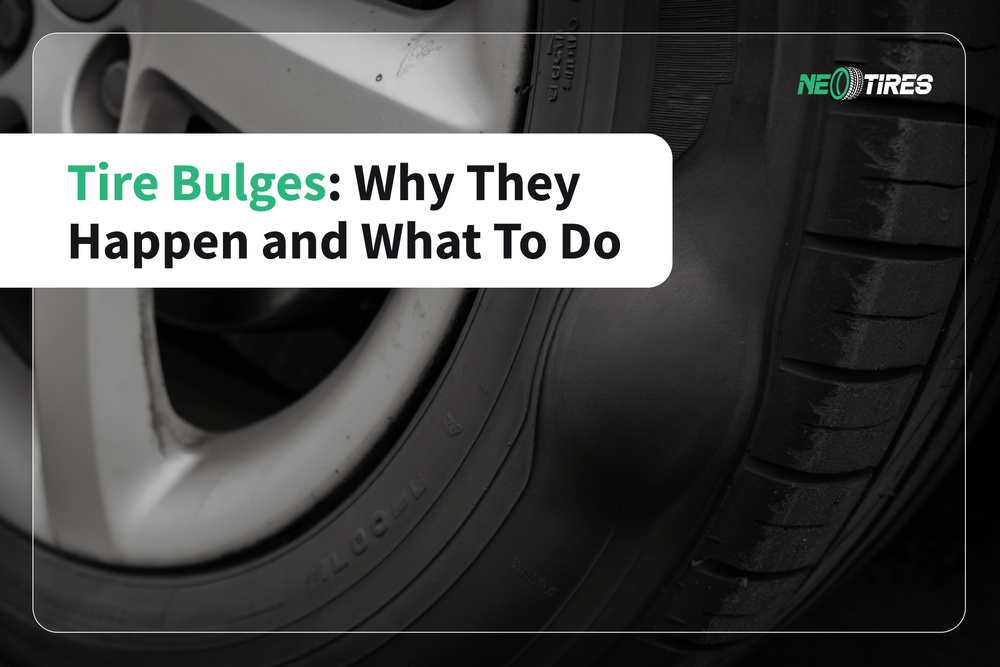
A tire bulge, also known as a bubble or sidewall separation, is a bump on the tire’s sidewall, and sometimes on the tread, that indicates where the internal materials - fabric, steel cords, inner liner, and plies - have been disrupted or separated. Normal indentations or ripples in radial tires occur where cords overlap during construction, and these are not considered bulges. Bulges come from separation or cord breakage, which refers to tire structural damage. Indentations are cosmetic, while bulges are dangerous, as confirmed by Michelin.
In many tires, manufacturing defects, such as poor bonding, can lead to bubbles that appear within months, often within the first six months of use. Bulges from impacts may show up immediately or after some time. This article explains what the causes of tire bulges are, how dangerous they are, what you can do to prevent them, and how to address the issue once a tire bulge occurs.
What Causes a Tire Bulge or Bubble?
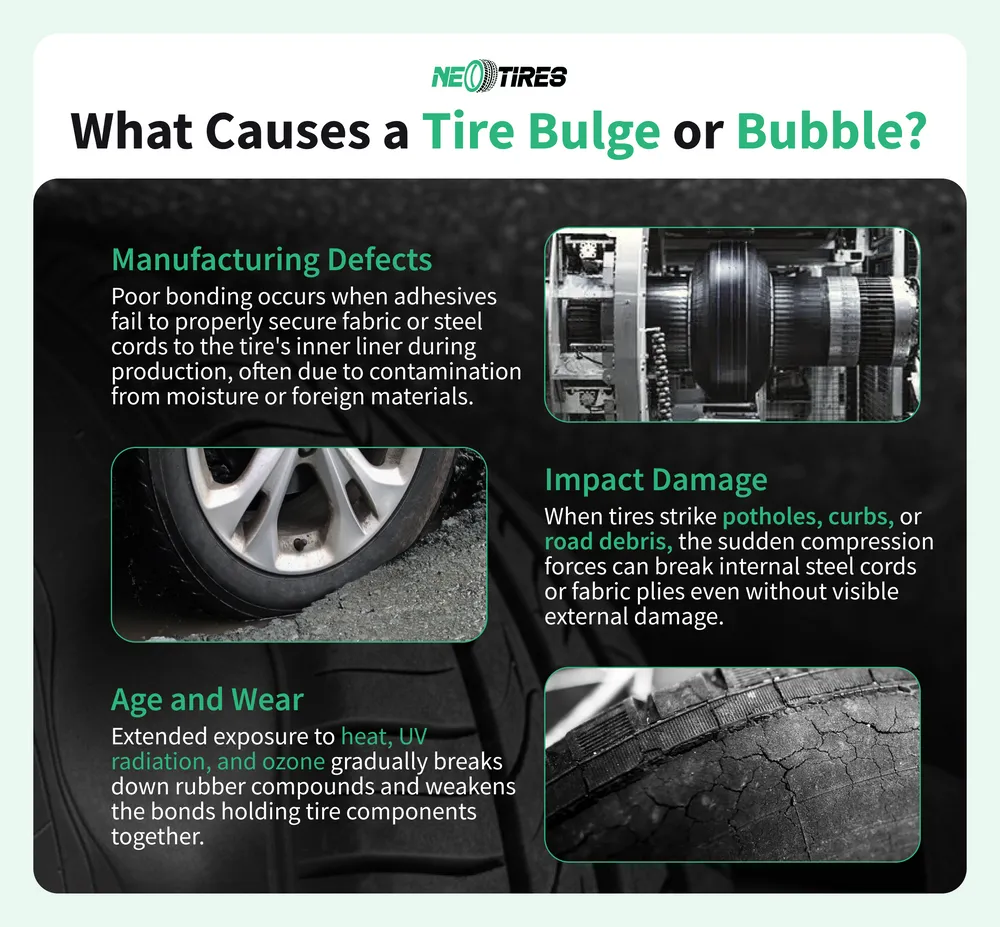
Three main causes create tire bulges:
- Manufacturing defects, such as poor bonding and contamination
- Impact damage from potholes, curbs, and debris
- Age and wear due to heat and UV degradation
Most bulges come from internal cord separation or breakage.
Manufacturing Defects & Construction Issues
- During manufacturing, adhesives and rubber must bond fabric or steel cords to the inner liner of the tire. If contamination, such as moisture or foreign material, or incomplete bonding occurs, the bond can fail, leading to separation between layers. Independent tests report that separations caused by component contamination usually show up early.
- Tires with fewer sidewall plies or lower build strength are more at risk. Lab tests under FMVSS have shown that tires with stronger sidewall construction withstand damage longer.
Impact Damage: Road Hazards & Physical Stresses
- Hitting potholes, curbs, debris, or sharp objects creates sudden compressive or bending forces that can break cords or separate ply layers. For example, when the sidewall is pinched between the rim and a road obstacle, internal damage can happen even without a large external tear.
- Over- or under-inflation:
- Underinflated tires flex more during driving. This extra flexing causes heat buildup and fatigue in cords.
- Overinflating increases stress on sidewalls, which makes the tire more vulnerable to damage from impacts, increasing the likelihood of developing a bulge when the tire encounters road hazards.
Age, Weathering, and Usage
- Heat, UV, and ozone can degrade rubber compounds and weaken bonding adhesives.
- Mileage wear reduces tread depth but also contributes to fatigue in sidewalls. Tire wear reduces tread depth and also leads to fatigue in the sidewalls.
✅ NeoTires Pro Advice: A tire with many miles but an intact sidewall may be safer than a newer tire with a bulge. Judgment should be based on condition, not just age.
How Dangerous Is a Tire Bulge?
Tire bulges create three significant safety risks: sudden blowouts (especially at high speeds), loss of vehicle handling and control, and further damage to rims and suspension. NHTSA considers tire bulges a ground for immediate tire replacement.
- Blowouts: weaker area fails, possibly suddenly. If at high speed, a blowout can result in loss of control.
- Loss of handling: the tire can flex unevenly if it has a bulge. Uneven flexing can cause vibration, pulling, or wobbling.
- Further damage: continuing to drive on a bulged tire can damage the rim, suspension, or neighboring tire due to uneven load/shock absorption.
NHTSA statistics show tens of thousands of crashes in the U.S. annually because of tire failures; while not all are due to bulges, sidewall damage is highlighted in safety literature as a significant factor leading to accidents.
Can a Tire Bulge Be Repaired?
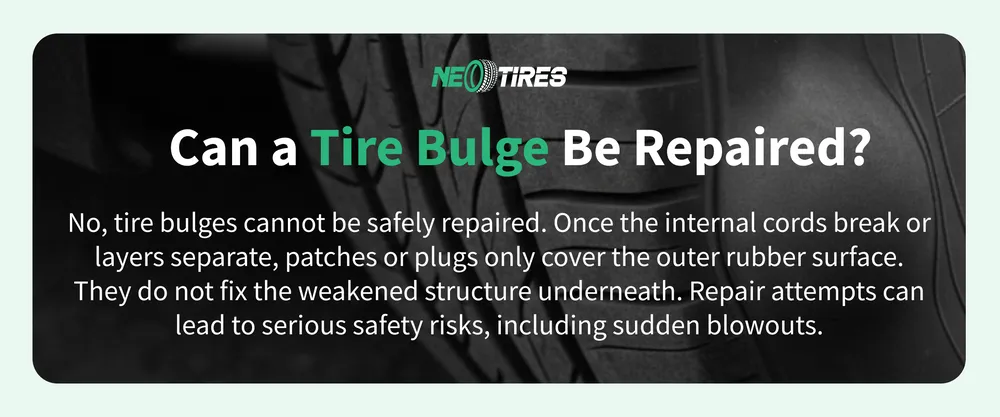
No, tire bulges cannot be safely repaired. The internal cord structure is damaged, making patches or plugs ineffective. Replacement is the only safe solution according to tire manufacturers like Michelin.
✅ NeoTires Pro Advice: Replacing a bulged tire is the only safe solution.
Warranty, Regulation & Standards for Tire Bulges
Federal safety rules in the U.S. work to prevent tire failures. However, whether someone pays for a bulge depends on the cause. The manufacturer’s warranty may cover a tire bulge if it's a proven manufacturing issue. A driver will likely have to pay for the tire replacement himself if the bulge comes from hitting a pothole or road debris, unless there is special road hazard coverage.
Regulatory / Safety Standards (U.S.)
- Federal rules, known as FMVSS No. 109 and 119, require all passenger and light-truck tires to pass strength tests before they can be sold. One of these tests is the plunger energy test, which measures how much force a tire’s sidewall can handle before it fails. In checks done by the NHTSA lab, all tires are tested at normal inflation pressure to be strong enough to meet the legal minimum.
- Real-world studies show that low-profile tires, which have shorter sidewalls, and tires with fewer reinforcing layers in the sidewall are more likely to bulge when they hit sharp impacts.
- The National Highway Traffic Safety Administration (NHTSA) also provides clear guidance for consumers: if you see a bulge or bubble in your tire, it is considered structural damage, not just a cosmetic issue. This means the tire is unsafe and should be replaced right away; driving on it risks a sudden blowout.
*U.S. Regulatory / Inspection / Out-of-Service Criteria Related to Sidewall Bulges and Damage
These are rules that affect when a tire is legally required to be taken out of service (especially for commercial vehicles) or fails inspection.
Warranty & Road Hazard Coverage
- Many tire makers will cover a bulge under the limited warranty if it appears because of a manufacturing defect, as long as you can show the purchase date, usage, and proper maintenance.
- The standard warranty usually does not cover a tire bulge if road hazards, impacts, under-inflation, or misuse cause it. Some retailers provide optional road hazard protection, which might cover bulges, depending on the terms.
- For warranty claims, make sure to document everything. Keep photos, proof of purchase, expected usage, and maintenance history.
What To Do If You Find a Bulge or Bubble
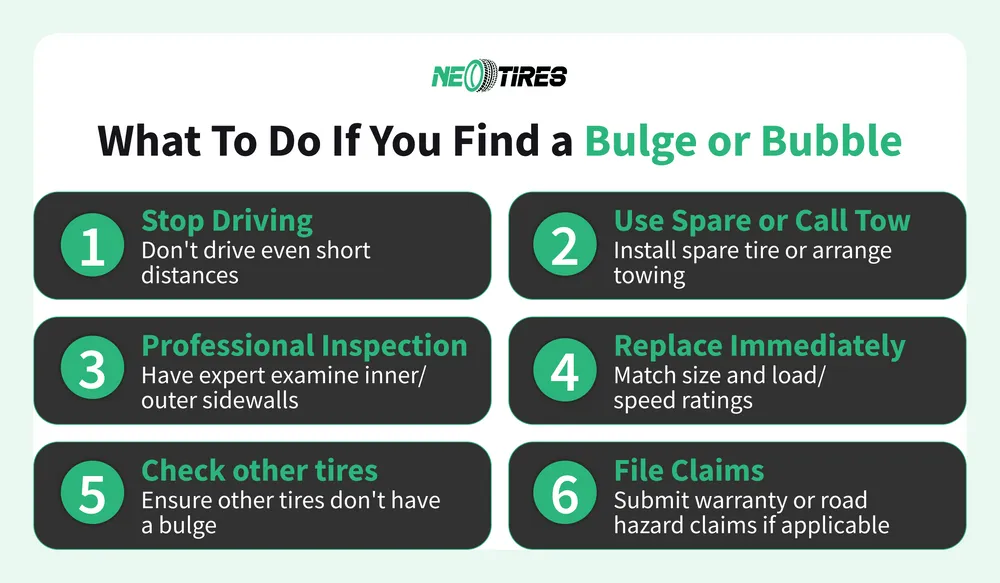
1. Stop driving / limit use
- Avoid driving if you see a tire bulge, even a small one. In many cases, driving even a short distance can lead to immediate failure.
2. Change to spare or tow
- Use a spare tire. If you don’t have one, call for towing the vehicle to a tire shop to reduce risk.
3. Get a professional inspection
- The expert must check the outer and inner sidewalls and remove the tire from the rim to examine the inner liner and cords, if necessary.
4. Replace the tire
- Use another tire that has the same size and load/speed rating.
5. Check all tires
- Other tires may have damage or be at higher risk, especially if you hit something that impacted more than one wheel
6. Handle warranty/insurance if applicable
- An early bulge can likely be due to a manufacturing defect, so you can submit a warranty claim.
How to Prevent Tire Bulges or Bubbles
- Maintain correct tire pressure. Check it every month and before long trips.
- Do not overload your vehicle beyond the tire/vehicle load rating.
- Drive carefully over poor roads; avoid potholes, curbs, and sharp debris. Slow down over speed bumps.
- Regularly inspect your tires, especially the sidewalls, for minor irregularities. Early detection reduces risk.
- Choose tires with strong sidewall construction if you often drive on rough roads.
- Consider models known for stronger sidewalls when replacing tires. Some good examples include BFGoodrich All-Terrain T/A KO2 and KM3, Cooper Discoverer S/T Maxx, and tires from the Toyo Open Country line.
- Ask your dealer about warranty and road hazard coverage.
Bottom Line
A tire bulge or bubble indicates structural damage, which can involve broken cords or separated layers. This is not just a cosmetic issue. The risk is serious, including blowouts and loss of control, especially at high speeds. You cannot safely repair a bulged tire; you must replace it for safety reasons. All statements here come from official sources, including tire manufacturers, FMCSA, CVSA, NHTSA literature, and industry warranty policy disclosures.
NeoTires' goal is to educate you about the causes, risks, and actions related to tire bulges or bubbles, backed by official studies and real warranty practices.
If replacement is required, use your vehicle specs to find the correct tire size and compare options.
Contact us in Delaware for recommendations tailored to your needs. We ship tires within 2-3 business days in any US region, including Los Angeles, New York, Chicago, or Texas.
Drive safe and choose your tires wisely!