

How do you start the tire search process? You're right if you're thinking about size, but it's still not a complete answer. Aside from tire size fitting, which matters a lot, you should also consider comfort, safety, and how and where your vehicle spends the most time.
This section will walk you through all the aspects you need to consider when getting new tires. Whether replacing your worn-out tires or just thinking about a seasonal switch, this article will help you not miss a thing during the process.
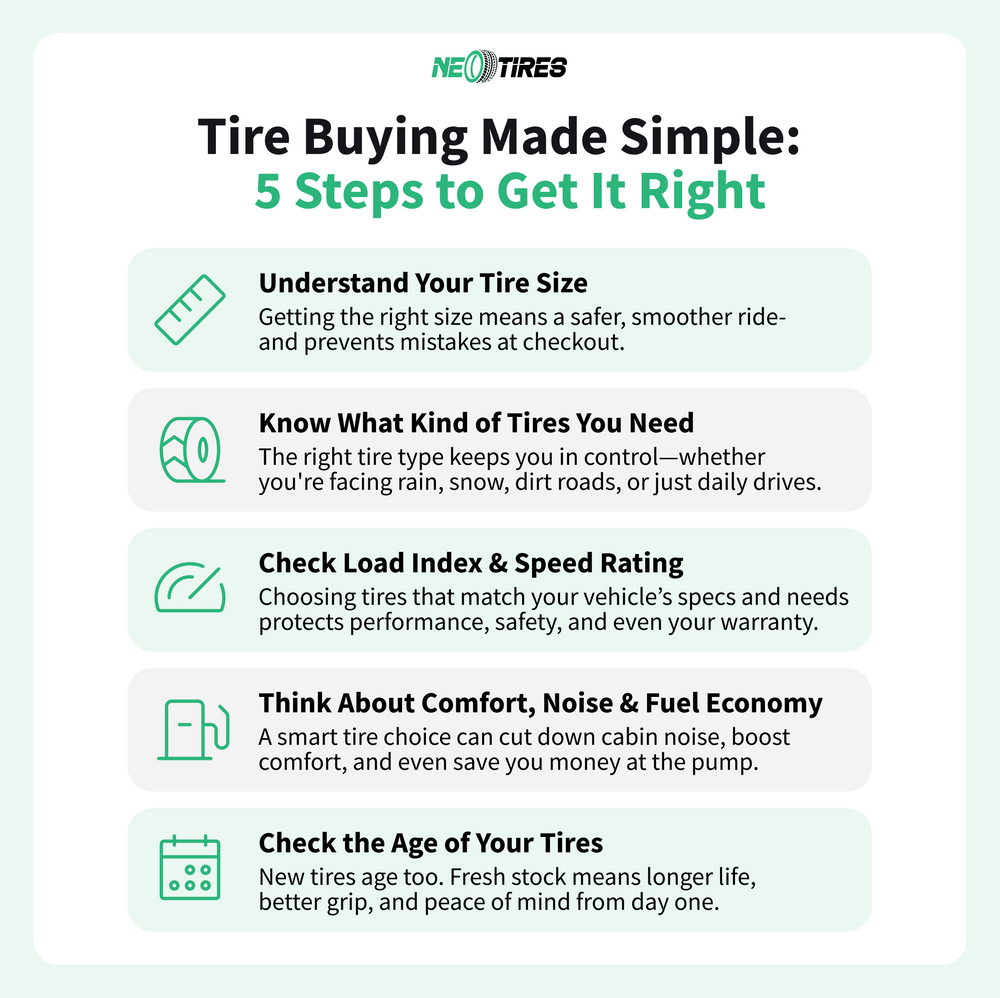
Understand Your Tire Size
This step is crucial in the tire buying process. The easiest way is to check the size of your current tires and stick to it for the new ones, unless you want to upgrade or downgrade. The tire size is right on its sidewall. It looks like the following sequence: 225/60R17 99H, expressing the tire width in millimeters, aspect ratio, tire construction (radial), rim diameter in inches, load index, and speed rating.
Your owner's manual also contains information about the recommended tire size for your vehicle. Once you understand which size is right for you, you can enter it into the NeoTires search tool. We need your width, aspect ratio, and diameter, and our system will generate all the models that fit your selection criteria.
Our Tire Size Guide offers in-depth details on everything you need about this topic. If you are unsure which size suits you, contact the NeoTires team for support.
Know What Kind of Tires You Need
Each tire is designed for specific conditions. An all-season tire does not perform as well in off-road conditions as an all-terrain tire, and a summer tire is useless in ice and snow conditions. So, buying a tire requires considering your driving conditions and style. This will narrow your options and increase the chance of finding the right product with the correct pattern, design, and grip in specific environments.
Here is a general breakdown of tires recommended for specific driving conditions. For in-depth descriptions of their unique features, read our full post on Tire Types.
Driving Style/Condition | Recommended Tire Type |
Daily commuting in all seasons | All-Season Tires |
Cold winters and icy roads | Winter/Snow Tires; All-Weather Tires |
Warm climates with sharp handling | Summer/Performance Tires |
Off-road or mixed terrain | All-Terrain / Mud-Terrain Tires |
Long road trips and comfort | Touring or Grand Touring Tires |
Consider Load Index and Speed Rating
Speed rating and load index are essential elements ensuring your tires’ safety. The speed index determines the maximum speed at which a tire can be handled safely, while the load index tells you how much weight you can safely carry.
When buying new tires, never choose a lower speed and load rating than those recommended by the manufacturer (usually, those on your OE tires). You can only upgrade if you need more weight support or a more spirited driving (when switching to performance tires, for example).
Read the full breakdown on Speed and Load Ratings in our dedicated article for more insights. Or, contact us for professional recommendations.
Think About Comfort, Noise, and Fuel Economy
Depending on the integrated technologies, modern tires offer improved quietness, better fuel efficiency, and longer mileage. If cabin noise bothers you, look for tires with noise-reduction technologies. Consider LRR tires if fuel efficiency is your priority. For long-lasting serviceability, touring tires and high-mileage products provide warranties up to 80,000 miles.
Check the Age of Your Tires
With NeoTires, you will get brand-new and safe tires, within industry-recommended age limits. To check your tire production date, look on the outside or inside part of the tire to find the DOT code that looks like this: DOT XXXX XXXX 1024 (or simply- the last four numbers).
The DOT code displays the tire production date in the last sequence of four digits. The "10" in our example refers to the 10th week of the 2024 year. For safety reasons, don't use tires for more than 6-10 years, even if they are still in good condition. Our dedicated article lets you learn all you need about the DOT Code.
Check These Questions Before Buying Tires:
- What size tire do I need?
- What kind of driving do I mostly do?
- Is the weather a factor where I live?
- Do I want a quieter, smoother ride?
- Am I hauling heavy loads or towing?
Still confused? That's what we're here for.
Need Help with more Tire Information?
We know - tire information can be confusing. That's why we're here to make the process easier. Use our Search Tool, or reach out to our assistants. We'll help you find the perfect match for your vehicle and driving needs. Drive safe and choose your tires wisely!