


Tire tread depth is one of the most critical factors for safe driving, as it affects traction, braking, and hydroplaning resistance. The tire tread depth charts in this article show safe limits, legal minimums, and replacement guidance for different driving conditions - including rain, snow, off-road, and highways. Use this guide to assess your tires’ condition quickly, make informed replacement decisions, and keep every drive safe.
Table of Contents
- How to Read a Tire Tread Depth Chart
- Standard Tire Tread Depth Chart
- Tread Depth of New Tires
- Legal Minimum Tread Depth Chart by Region
- Recommended Depths for Safety in Different Driving Conditions
- DOT Regulations: Tread Depth for Trucks and Commercial Vehicles
- Tread Depth Summary: When Tires Need Replacing
- How Can NeoTires Help?
How to Read a Tire Tread Depth Chart
A tire tread depth chart helps drivers interpret measurements and determine whether tires are safe or need replacement. Most charts use 32nds of an inch or millimeters, showing thresholds for:
- Optimal / New Tires - maximum grip and braking performance
- Caution / Near Limit - reduced traction in specific conditions
- Critical / Replace Immediately - unsafe for all conditions
Therefore, a chart provides a visual benchmark for decision-making rather than guessing whether your tires are “fine”. For example, tires at 4/32” may still be legal, but can already underperform in rain. See our step-by-step instruction guide on How to Check Your Tire Tread Depth before delving into interpreting your actual tread depth.
Standard Tire Tread Depth Chart (mm and 32nds)
Consider the tire wear measurement chart below, in inches and mm, as a general guideline:
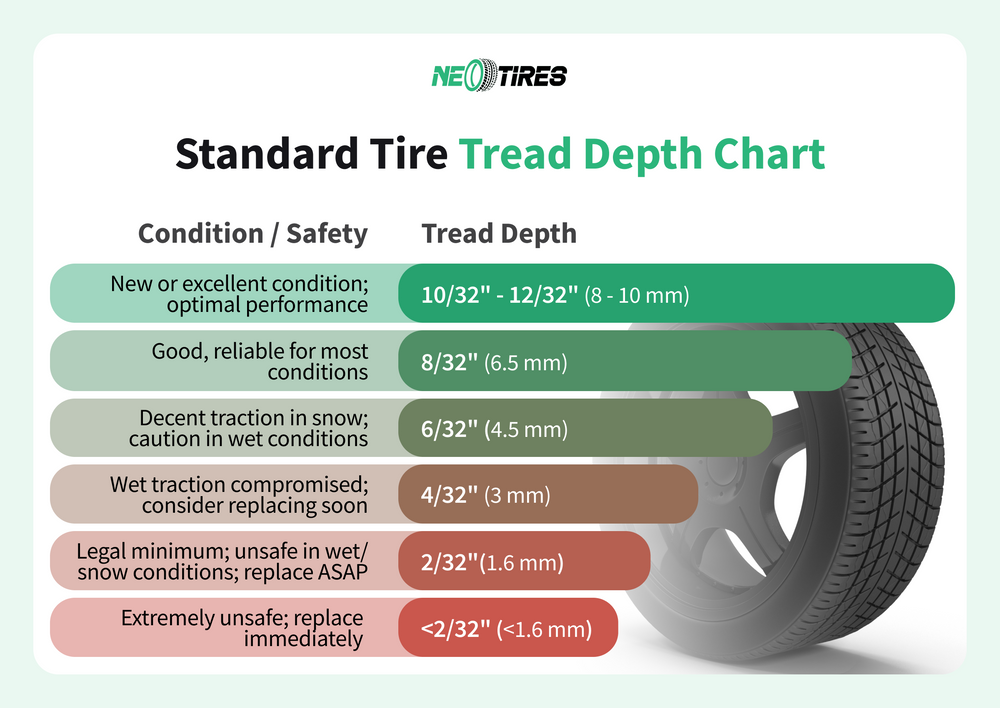
Tread Depth | Millimeters (mm) | Condition / Safety |
10/32" - 12/32" | 8 - 10 mm | New or excellent condition; optimal performance |
8/32" | 6.5 mm | Good, reliable for most conditions |
6/32" | 4.5 mm | Decent traction in snow; caution in wet conditions |
4/32" | 3 mm | Wet traction compromised; consider replacing soon |
2/32" | 1.6 mm | Legal minimum; unsafe in wet/snow conditions; replace ASAP |
<2/32" | <1.6 mm | Extremely unsafe; replace immediately |
NeoTires Safety Note: Always measure multiple spots across the tire (center, inner, outer edges) because tires often wear unevenly. A single reading can be misleading. These measurements are based on testing by AAA, Consumer Reports, and NHTSA standards for passenger vehicles.
Tread Depth of New Tires: What to Expect from Fresh Tires
New tires come with different tread depths depending on type and intended use. Most passenger all-season tires often have a tread depth of 10/32″ to 11/32″, which is the industry standard for sedans, coupes, and crossovers. Light trucks and SUVs typically range from 11/32″ to 12/32″, while performance tires are intentionally shallower at 8/32″ to 10/32″ for improved dry handling. Winter and off-road tires feature even deeper tread for specialized conditions, ranging between 11/32 and 19/32'', respectively. Here is a deeper breakdown of the new tire depth in inches and mm, based on tire type:
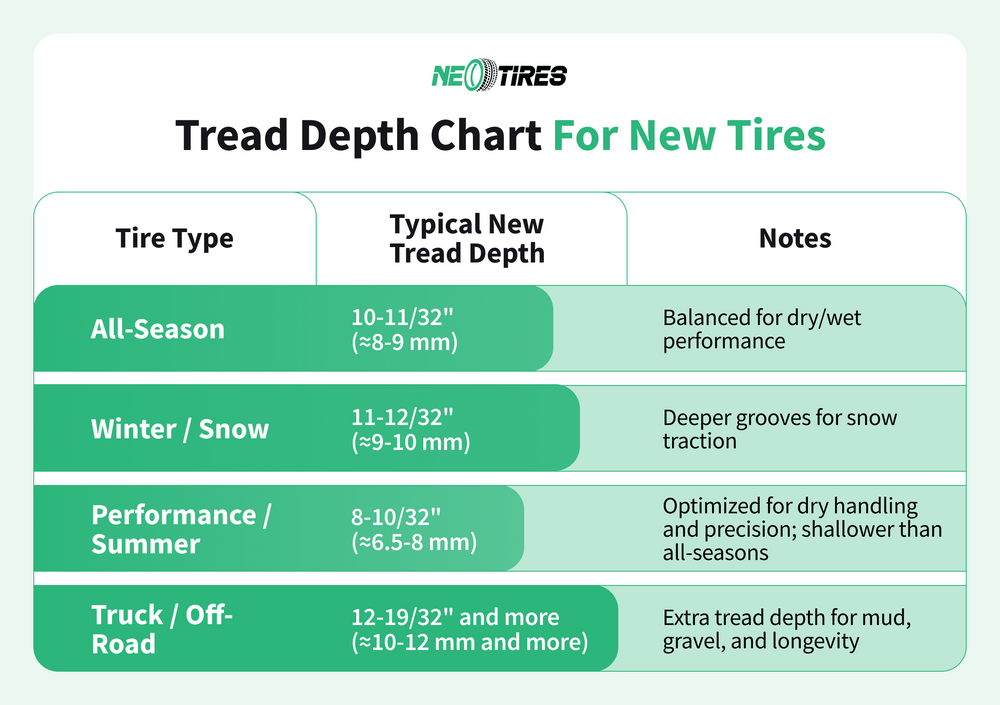
Tire Type | Typical New Tread Depth | Notes |
All-Season | 10-11/32" (≈8-9 mm) | Balanced for dry/wet performance |
Winter / Snow | 11-12/32" (≈9-10 mm) | Deeper grooves for snow traction |
Performance / Summer | 8-10/32" (≈6.5-8 mm) | Optimized for dry handling and precision; shallower than all-seasons |
Truck / Off-Road | 12-19/32" and more (≈10-12 mm and more) | Extra tread depth for mud, gravel, and longevity |
All-Season Tires (≈10-11/32″ / 8-9 mm)
This is the standard tread depth for most new passenger cars, sedans, and crossovers. This tread depth is designed to balance wet and dry traction, with grooves deep enough for rain performance but not so deep that dry handling is compromised.
Winter / Snow Tires (≈11-12/32″ / 9-10 mm):
Deeper tread allows snow to pack into the channels, increasing grip. These tires wear faster in warm weather, so starting depth matters for winter performance.
Performance / Summer Tires (≈8-10/32″ / 6.5-8 mm):
Performance/summer tires for sports cars and performance-focused driving often feature shallower tread than all-season tires to improve road contact, cornering precision, and responsiveness on dry surfaces. The reduced starting depth means wet traction declines sooner, making regular monitoring especially important with performance tires.
Truck / Off-Road Tires (≈12-19/32″ / 10-12 mm):
Extra tread is built to handle mud, gravel, and heavy loads. The deeper grooves also extend overall tire life in rough conditions.
Legal Minimum Tread Depth Chart by Region
Legal minimum tread depth varies by region. While the U.S. general requirement is 2/32" in most states, as approved by NHTSA, the minimal standard in Idaho and California is 1/32''. It's wise for you to check local regulations to avoid breaking the law and ensure your safety while driving. Here is the detailed breakdown:

*42 U.S, states consider 2/32 inch the minimum legal tread depth
Recommended Depths for Safety in Different Driving Conditions
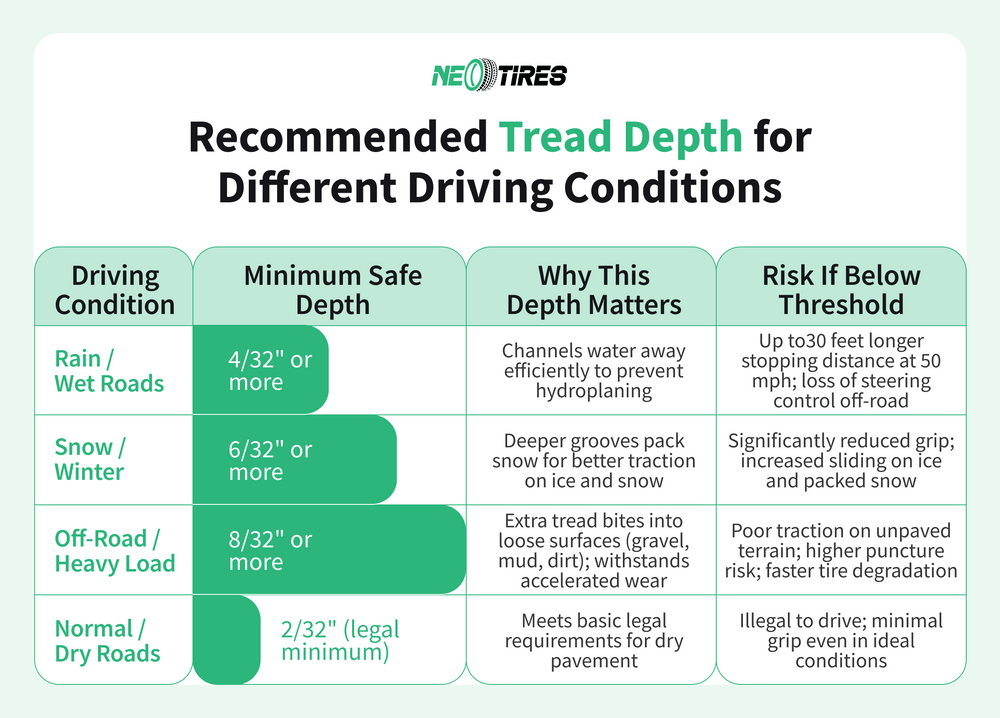
The table below guides you through the tire wear measurement chart for snow, wet, and off-road conditions:
Snow and Winter Driving
Winter conditions demand deeper tread, with 6/32" being the minimum safe depth for snow and ice. Deeper grooves allow snow to pack into the tread pattern, which actually improves traction by creating a snow-on-snow contact that grips better than rubber on ice.
Once your tread wears below 6/32", the snow-packing effect diminishes dramatically, causing your tires to slide more easily on both ice and packed snow. Even all-season tires lose most of their winter capability at this depth.
If your tread's already below 6/32", winter traction is compromised. Here's where to start.Right now: $15 off 2 tires, $20 off 4 tires, plus free shipping on:
- Pirelli Scorpion Winter 2, rated 5 stars, from $214.61 per tire
- Continental VikingContact 7, rated 4.9 stars, from $125.96 per tire
- Nokian Hakkapeliitta R5, rated 4.8 stars, from $138.49 per tire
Or browse all Winter Tires, dispatched same day, with free shipping included.
Off-Road and Heavy Load Conditions
Drivers who regularly travel on unpaved roads or carry heavy loads should maintain at least 8/32" of tread depth. The extra tread volume serves two purposes:
- It provides the aggressive bite needed to grip loose surfaces like gravel, mud, and dirt
- It offers a larger rubber reserve to absorb accelerated wear from rough terrain and increased vehicle weight.
Driving off-road with shallow tread not only reduces traction but also increases the risk of punctures and sidewall damage.
Rain and Wet Roads
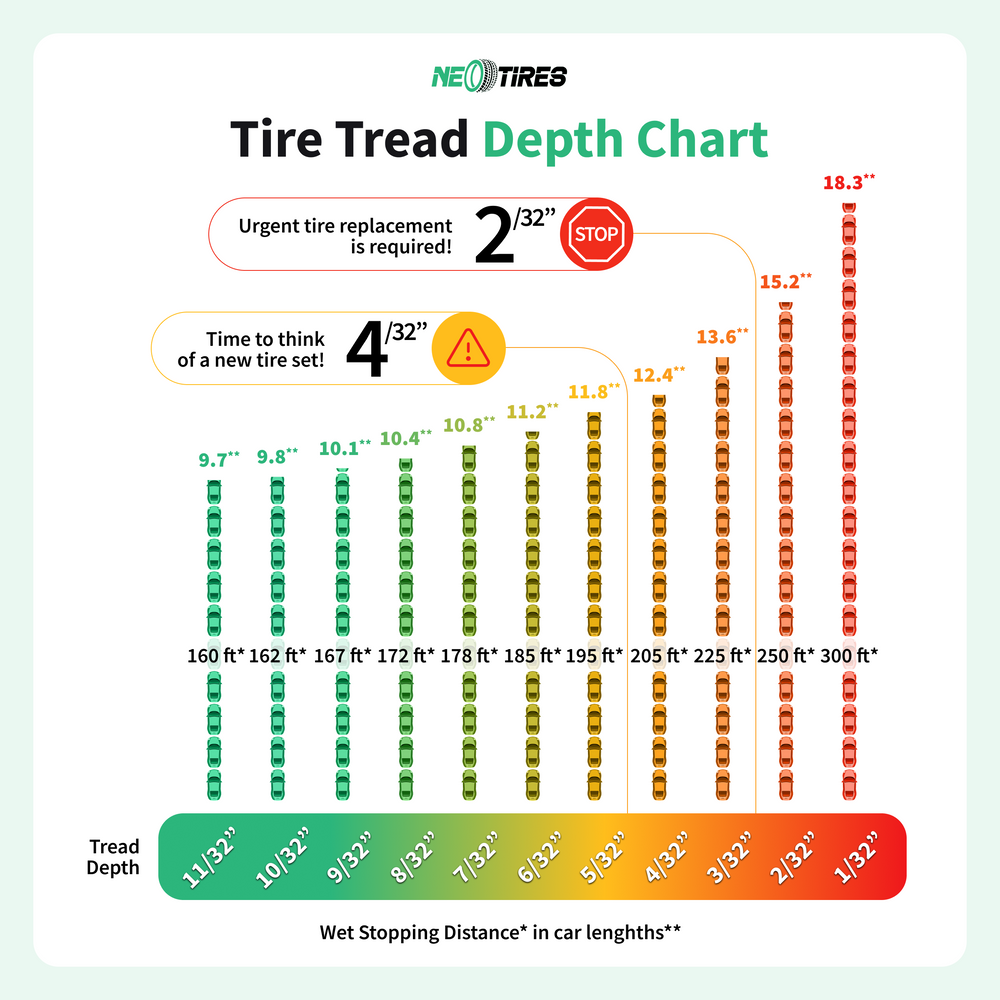
You need at least 4/32" of tread depth for safe wet-weather driving. When tread becomes shallower than this threshold, the grooves lose their ability to channel water efficiently, causing the tire to ride on top of the water rather than maintaining contact with the road surface.
Driving in wet conditions with tires less than 4/32'' creates hydroplaning conditions where steering and braking control become compromised. The impact on stopping distance is significant: Consumer Reports testing found that tires worn to 4/32" require an additional 30 feet to stop on wet pavement compared to new tires. AAA's highway-speed testing (60 mph) found even more dramatic results, with 4/32" tires needing an extra 87 feet to stop in wet conditions, representing a 43% increase in stopping distance.
Tread depth chart for wet conditions
DOT Regulations: Tread Depth for Trucks and Commercial Vehicles
Commercial vehicles and trucks require deeper tread than regular passenger cars. The U.S. Department of Transportation (DOT) sets specific minimum tread depth requirements for commercial vehicle tires to ensure safety under heavy loads and demanding conditions.
These regulations differentiate between tire positions: steer tires (front axle) handle steering and require more tread for safe maneuvering. In contrast, drive and trailer tires can operate safely with less tread depth since they don't control vehicle direction.
The following chart highlights optimal tire tread for trucks and commercial vehicles based on DOT standards:
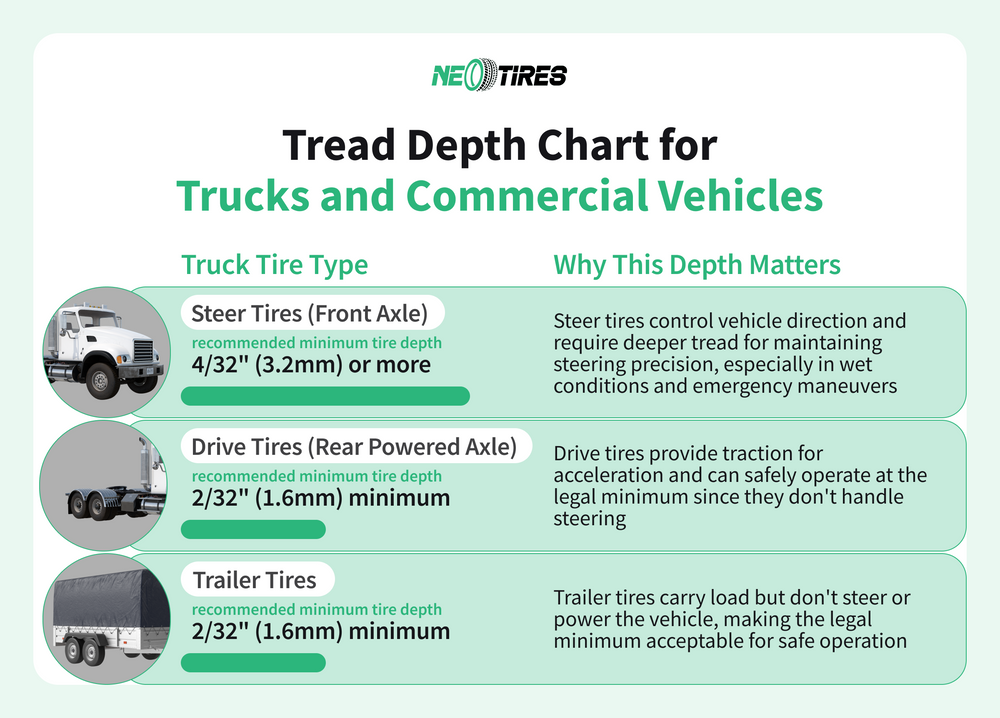
Important Note: These are DOT-mandated minimums for commercial vehicles. Many fleet operators and safety experts recommend replacing steer tires at 6/32" and drive/trailer tires at 4/32" to maintain optimal performance before reaching the legal limit. Always consult your fleet management guidelines or a commercial tire specialist for recommendations specific to your hauling conditions, load weights, and route types.
Tread Depth Summary: When Tires Need Replacing
Tire replacement decisions should be based on tread depth and overall tire condition, not just numbers on a chart. Here’s what to watch for:
Based on the tread depth
At 2/32" or below, replacement is mandatory. Your tires are legally worn out and unsafe in any condition. At 3/32", you are in the danger zone for wet/slushy roads. Plan to replace them within one to two weeks. At 4/32", performance drops noticeably in rain. Start budgeting and plan to replace them within the next month or two. Above 6/32", you're still safe, but keep checking monthly to catch wear before it becomes critical.
Based on age and condition
Age is just as important as tread depth; physical damage is more important than any measurement; uneven wear indicates a mechanical problem. Replace tires if you notice severe wear, bulges, or cracks, or if your tires are more than 6 years old, regardless of whether there is still tread depth left.
Are Your Tires Running Out of Tread? NeoTires Can Help
If the charts in this article indicate your tires are running low on tread, the wisest decision is to replace them. NeoTires is the right place to explore new tires tailored to your driving needs, budget, and conditions.
At NeoTires, you will find a wide variety of top-tier products from trusted brands at affordable prices, with easy checkout and fast shipping across the U.S. Use our user-friendly tool to Search Tires By Size or chat with us directly for professional advice. Drive safely and check your tread depth regularly!
References:
AAA (American Automobile Association) | Tread Confidently
Consumer Reports | What Happens To Performance When Tires Are Worn
NHTSA (National Highway Traffic Safety Administration) | Tire Safety Ratings and Awareness
U.S. Department of Transportation: Commercial Vehicle Tire Regulations