


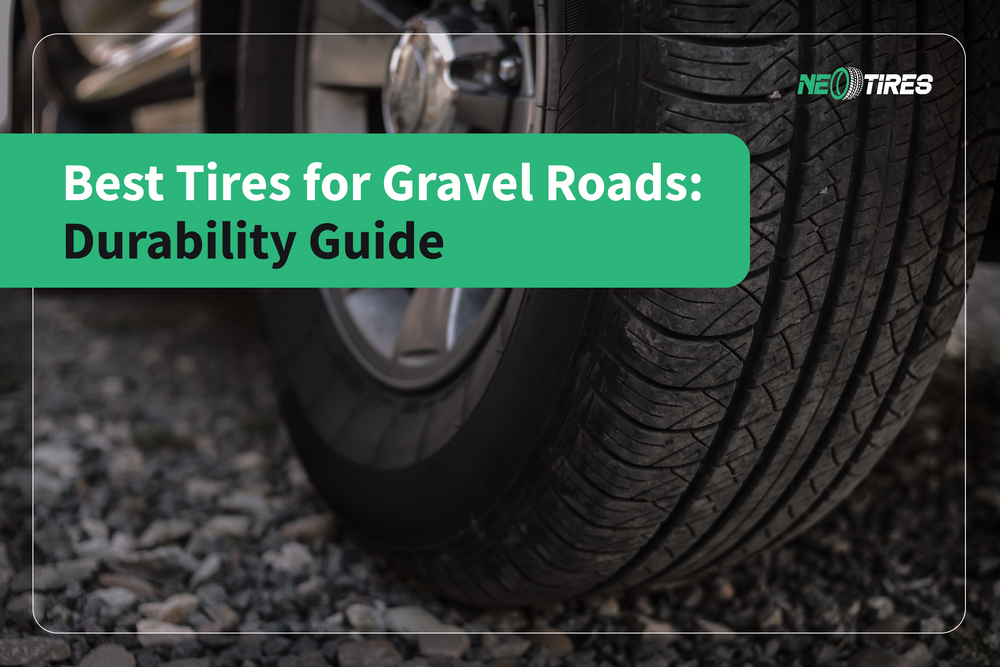
Tire wear on gravel and rough roads isn't a new issue. As far back as 1926, the Highway Research Board noted that driving on gravel could cut tire life by as much as 50% compared to smooth pavement. According to the Federal Highway Administration, about 1.3 million miles of unpaved roads are still in use across the U.S., making tire wear an expensive challenge for millions of vehicle owners driving on gravel roads.
Sharp rocks, loose gravel, and constant cuts can wear down tires faster and increase the chances of punctures. Picking the right tire isn't just about grip; it's also about durability, saving money in the long run, and keeping you safe on the road. In this guide, we'll show you what makes a tire durable on gravel and uneven surfaces, how to judge trade-offs, and which real models deliver strong longevity in gravel conditions.
Table of Contents
- What Are the Best Tires for Gravel Roads?
- All-Terrain vs All-Season Tires on Gravel
- Why Tires Wear Out Faster on Gravel Roads
- 4 Key Features That Make a Tire Durable on Gravel
- Should You Adjust PSI Tire Pressure for Gravel Roads?
- FAQs
- Conclusion
What Are the Best Tires for Gravel Roads?
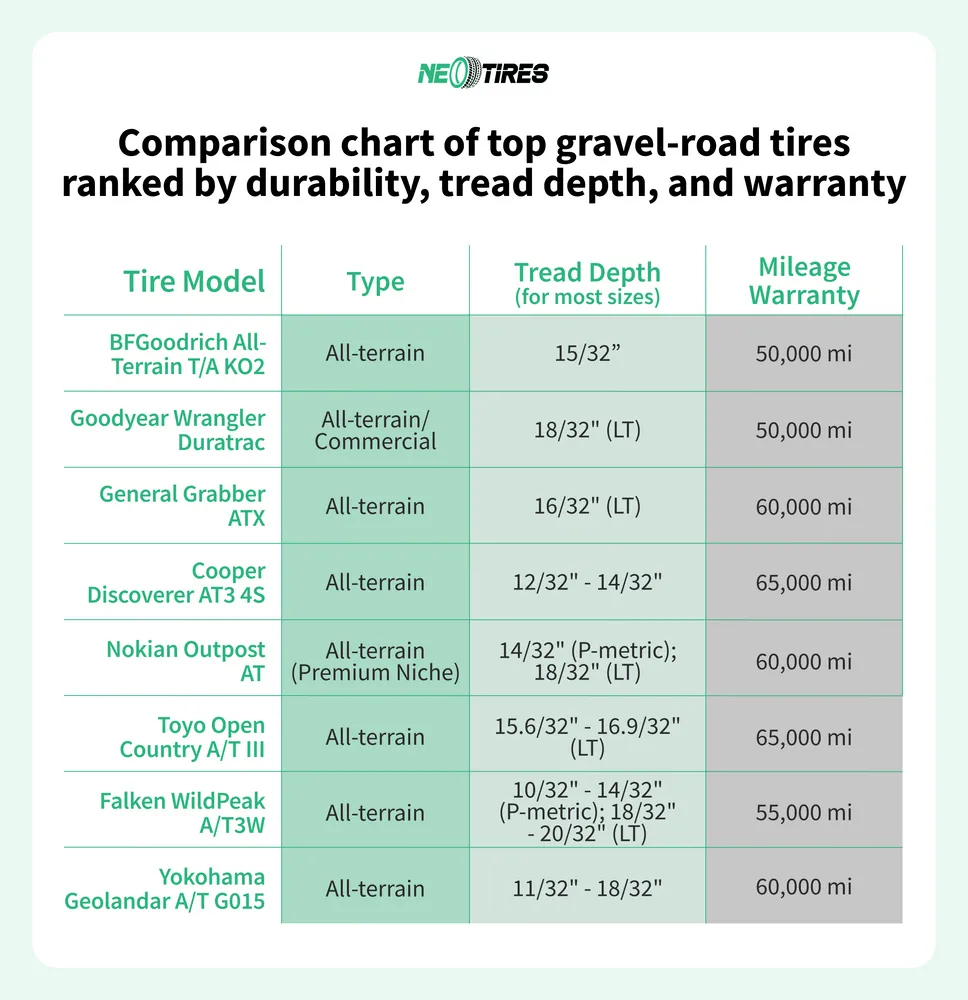
The best tires for gravel are all-terrain or rugged-terrain models featuring reinforced sidewalls, chip-resistant rubber compounds, stone-ejector technology, and deep tread. Top performers include:
- BFGoodrich All-Terrain T/A KO2: Best overall durability
- Goodyear Wrangler Duratrac: Optimal for mixed use with hauling. See our full article on Best Goodyear All-Terrain Wrangler Tires.
- General Grabber ATX: Optimal for bold off-road traction with reliable on-road comfort
- Cooper Discoverer AT3 4S: Optimal for all-weather traction and daily driving
- Nokian Outpost AT: Optimal for electric vehicles and year-round versatility
- Toyo Open Country A/T III: Optimal for towing on gravel
- Falken WildPeak A/T3W: Optimal for winter-rated performance and all-terrain use
- Yokohama Geolandar A/T G015: Optimal for quiet highway driving and light off-road versatility
These tires are engineered to resist cuts, automatically eject stones, and maintain tread integrity when frequently driving on gravel.
Best Tires For Gravel Roads: Comparison Table*
| Tire Model | Type | Tread Depth (for most sizes) | Mileage Warranty | Gravel Durability Features |
| BFGoodrich All-Terrain T/A KO2 | All-Terrain | 15/32” | 50,000 mi | 20% stronger sidewalls, chip-resistant compound |
| Goodyear Wrangler Duratrac | All-Terrain / Commercial | 18/32'' (LT) | 50,000 mi | TractiveGroove™ tech, reinforced shoulders |
| General Grabber ATX | All-Terrain | 16/32” (LT) | 60,000 mi | Cut/chip resistant compound, ComfortBalance™ design |
| Cooper Discoverer AT3 4S | All-Terrain | 12/32”- 14/32'' | 65,000 mi | Adaptive-Traction tech, silica blend |
| All-Terrain (Premium Niche) | 14/32'' (P-metric); 18/32” (LT) | 60,000 mi | Aramid sidewalls, stone ejectors | |
| Toyo Open Country A/T III | All-Terrain | 15.6/32''- 16.9/32'' (LT) | 65,000 mi | Stone ejectors, chip resistance |
| Falken WildPeak A/T3W | All-Terrain | 10/32''- 14/32'' (P-metric); 18/32''- 20/32'' (LT) | 55,000 mi | 3D Canyon Sipes, heat diffuser |
| Yokohama Geolandar A/T G015 | All-Terrain | 11/32'' - 18/32'' | 60,000 mi | EnduroCore construction, silica compound |
*Sources: Manufacturer specifications, Consumer Reports
Ready to upgrade for gravel? Two of our top-rated picks. Right now: $15 off 2 tires, $20 off 4 tires, plus free shipping:
- Toyo Open Country A/T III, rated 4.9 stars, from $179.43 per tire
- Nitto Terra Grappler G2, rated 4.9 stars, from $169.48 per tire
Or browse all All Terrain Tires, dispatched same day, with free shipping included.
All-Terrain vs All-Season Tires on Gravel
All-Terrain tires are ideal for gravel, dirt, and unpaved routes, while All-Season tires can handle occasional gravel travel on maintained roads but are not designed for extended off-road use.
A/T vs AS Tires on Gravel: Comparison Table
The table below compares all-terrain vs all-season tires: traction on unpaved roads, resistance to cuts, tread depth, load ranges, and expected tread life.
Tire Type | All Terrain (A/T) | All-Season (A/S) |
Primary Use | Mixed on/off-road: gravel, dirt, light mud | Paved roads and mild seasonal changes |
Gravel Traction | Excellent: deep tread blocks and open shoulders improve grip | Limited: shallow tread, smoother ribs slip on loose gravel |
Chip / Cut Resistance | High; reinforced compounds with silica, aramid, or cut-resistant rubber | Low; built for wear and comfort, not impact protection |
Tread Depth (new) | ~12/32'' to 14/32'' for P-metric; ~15/32''-19/32'' for LT | ~9/32'' to 12/32'' for P-metric; ~14/32'' - 19/32'' for LT |
Sidewall Strength / Load Range | Often LT-rated (C–E) with thicker sidewalls | Usually P-metric (B/XL); softer and more flexible sidewalls |
Ride/ Noise | Firmer, louder on pavement | Smooth, quiet highway comfort |
Longevity on Gravel | Durable against abrasion and debris; typically 40,000-60,000 miles | 50,000-80,000 on paved roads. Longevity reduced by 20% to 50% on gravel roads* |
Fuel Efficiency | Moderate-High rolling resistance | Lower rolling resistance (better mpg) |
Best For | Drivers who split time between pavement and rough/unpaved/gravel roads | Drivers staying mainly on highways/city roads, with occasional driving on gravel |
*Under normal paved driving, passenger tires typically lose about 1/32 inch of tread every 6,000–7,000 miles. On gravel roads, rough texture and loose stones cause faster abrasion and chipping, which can shorten All-Season tire life by roughly 20–50%. The harsher the gravel, the greater the wear. Source reference: Based on tread wear data discussed in the study “Assessment of Tire Wear Performance Indicators,” published in MDPI (2024)
Why Tires Wear Out Faster On Gravel Roads
Gravel shortens tire life because the loose aggregation of rock fragments creates continuous abrasion, heat buildup, and tire sidewall stress. Sharp stones can chip rubber, while road vibration weakens tread bonding.
Key factors that influence tire wear on gravel include:
- Micro-abrasions from gravel edges.
- Stone drilling into tread grooves.
- Heat buildup from dust and friction.
- Sidewall flex leading to punctures.
Historical Data: A landmark 1926 Highway Research Board study found that tires on gravel roads experienced up to 158% more rear tire wear compared to paved roads.
Temperature Impact on Gravel Tire Wear
Temperature significantly affects how long tires last on gravel roads. Research from the University of Kansas showed that tire wear can go up by 13 to 81% at 130°F compared to 70°F. This outcome explains why driving in the summer on hot gravel surfaces speeds up tread wear.
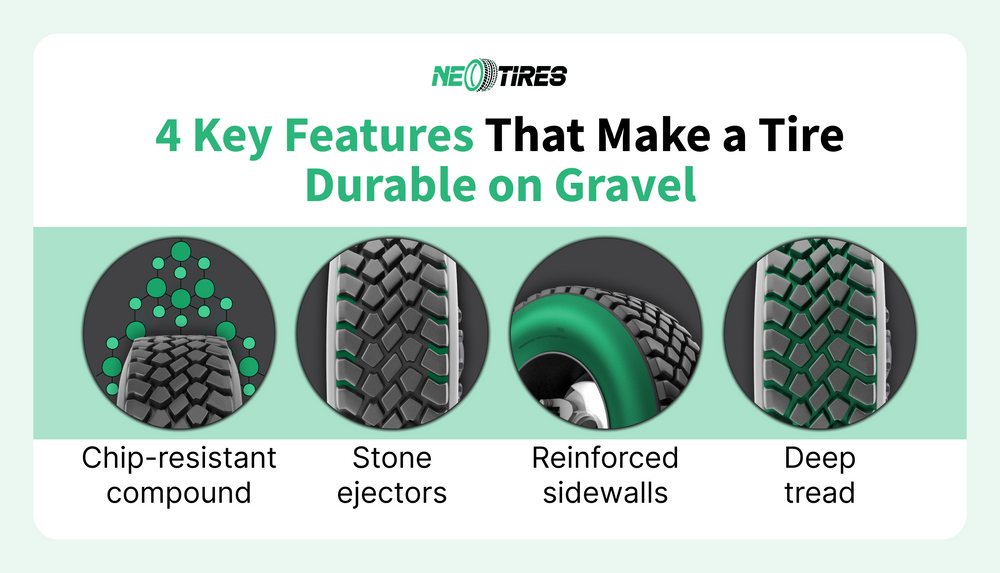
4 Key Features That Make a Tire Durable on Gravel
1. Chip- and Cut-Resistant Rubber Compounds
Modern gravel-rated tires use high-silica blends and aramid fibers (used in bulletproof vests) to improve resistance to cuts and chipping.
2. Stone Ejector Technology
Special ridges in tread grooves eject stones automatically, preventing them from drilling into the tire and causing damage.
3. Reinforced Sidewalls
Thicker, multi-ply construction reduces puncture risk when driving over sharp rocks. For example, BFGoodrich KO2 sidewalls are 20% stronger than the previous generation, resulting in better resistance to gravel abrasions.
4. Deeper Tread Depth
More tread equals a longer lifespan before the tire wears down. For example, Falken WildPeak A/T3W features up to 20/32” tread depth for LT models, one of the deepest in its class.
Should You Adjust PSI Tire Pressure for Gravel Roads?
Yes, you should adjust tire PSI when driving on gravel roads, as lowering tire pressure increases the tire’s footprint, improving grip on loose or rocky terrain. Pressure adjustment must be done within safe limits depending on speed, terrain severity, and load.
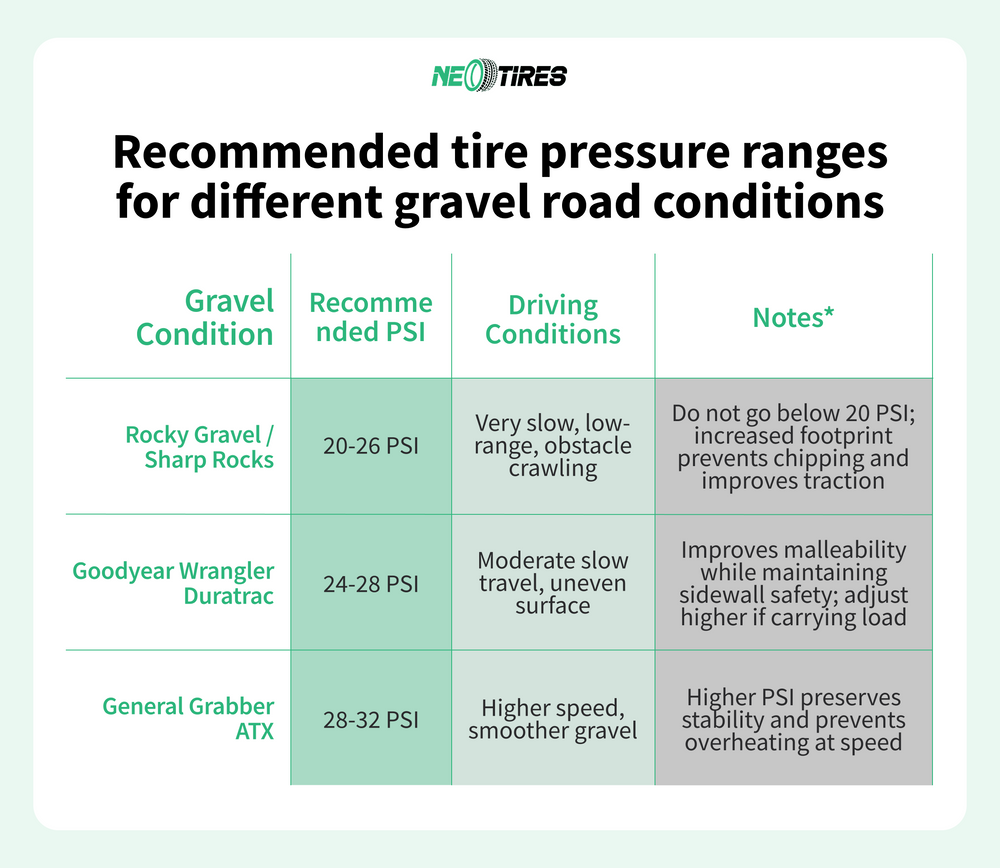
Recommended PSI by Gravel Type (Unloaded / Lightly Loaded Vehicles)
Gravel Condition | Recommended PSI | Driving Conditions | Notes* |
Rocky Gravel / Sharp Rocks | 20–26 PSI | Very slow, low-range, obstacle crawling | Do not go below 20 PSI; increased footprint prevents chipping and improves traction |
Rough / Slow Gravel Roads | 24–28 PSI | Moderate slow travel, uneven surface | Improves malleability while maintaining sidewall safety; adjust higher if carrying load |
Fast / Maintained Gravel Roads | 28–32 PSI | Higher speed, smoother gravel | Higher PSI preserves stability and prevents overheating at speed |
* All pressures are suggested for LT construction tires only and should not apply to drivers using passenger construction tires. This guide is based on an average range of sizes, not a specific size or tire. Narrow commercial-style tires need higher pressures. Lowering pressures might be necessary to get your vehicle through tough terrain or to reduce tire damage when off-road. However, lowering tire pressures below the recommended level for your vehicle is the driver's responsibility, and checking the vehicle’s weight and tire size specifications is mandatory. Lowering pressure beyond the manufacturer’s limits can cause overheating and long-term tire damage. Driving slowly over obstacles and reinflating tires to the proper levels once the vehicle returns to regular use and conditions is highly recommended. Check with the manufacturer for recommended tire pressures for your specific brand.
✅ NeoTires Safety Tip: Start with a small PSI reduction when driving on gravel and adjust gradually based on real-time feedback such as traction, comfort, and steering stability. If the vehicle has a front-heavy weight distribution (such as EVs or trucks with front-mounted equipment), running 2-3 PSI lower in the front tires may improve traction. However, do not reduce tire pressure below 25 PSI for passenger (P-metric) tires or below 28 PSI for SUVs and light trucks with LT or XL tires, unless the vehicle is equipped with off-road-specific tires and wheels designed to operate safely at lower pressures.
FAQs
Do Gravel Roads Wear Out Tires Faster?
Yes. Gravel can reduce tread life by as much as 50% compared to smooth pavement due to constant abrasion and stone drilling. It's recommended to choose chip-resistant tires with reinforced sidewalls that resist gravel abrasion and ensure long serviceability if driving frequently on gravel.
Are All-Terrain Tires Good for Gravel?
Yes, all-terrain tires are optimal for gravel roads as they are specifically engineered with deeper tread, reinforced sidewalls, and cut-resistant compounds that make them more durable than highway tires.
Which Tire Lasts The Longest on Gravel?
Based on available data from Consumer Reports and manufacturer testing, the BFGoodrich KO2 and Cooper Discoverer AT3 have among the longest tread life on gravel due to advanced rubber technology and reinforced sidewalls.
What Is The Ideal Tire Type for Gravel and Highway?
Choose an all-terrain tire with a mileage warranty of 60,000+ miles and balanced highway manners, such as the General Grabber ATX or Cooper Discovery AT3 4S.
Conclusion
Gravel and unpaved roads demand more from your tires than standard highway driving. Choosing tires with reinforced construction, chip-resistant compounds, stone-ejector technology, and deep tread can save you miles in wear while protecting you from punctures and unexpected blowouts.
At NeoTires, we evaluate real-world data, certified testing, and driver feedback to recommend tires tailored to your region and driving style. Our experts ensure you get maximum durability, safety, and proven results. Reach out to us if you need assistance in finding the best tires for your specific roads, or use our search tool to find by vehicle, tire type, tire size, or brand.
Drive safely and choose wisely!
Sources and References
- Federal Highway Administration. Gravel Roads Construction and Maintenance Guide; U.S. Department of Transportation: Washington, DC, USA.
- Transportation Research Board. Tire Wear Investigation; National Research Council: Washington, DC, USA, 1926
- National Highway Traffic Safety Administration. Tire Safety and Performance Standards; U.S. Department of Transportation: Washington, DC, USA.
- Giechaskiel, B.; Ferrarese, C.; Grigoratos, T. Tire Wear, Tread Depth Reduction, and Service Life. Vehicles 2025, 7(2), 29. https://doi.org/10.3390/vehicles7020029
- Cooper Tires. Tire Pressure Guide; Cooper Tire & Rubber Company: Findlay, OH, USA.