


When it’s time to replace tires, most drivers face the same question: should I invest in premium tires from Michelin, Bridgestone, or Continental-or save money with budget alternatives, such as Accelera, Aturo, or Kenda? The difference isn’t only the sticker price. Tires directly affect safety, stopping distance, durability, comfort, and fuel efficiency. This article breaks down the facts for U.S. drivers using manufacturer specs and independent U.S. test data so you can make a confident, evidence-based choice.
What’s Different Between Budget and High-End Tire Performance?
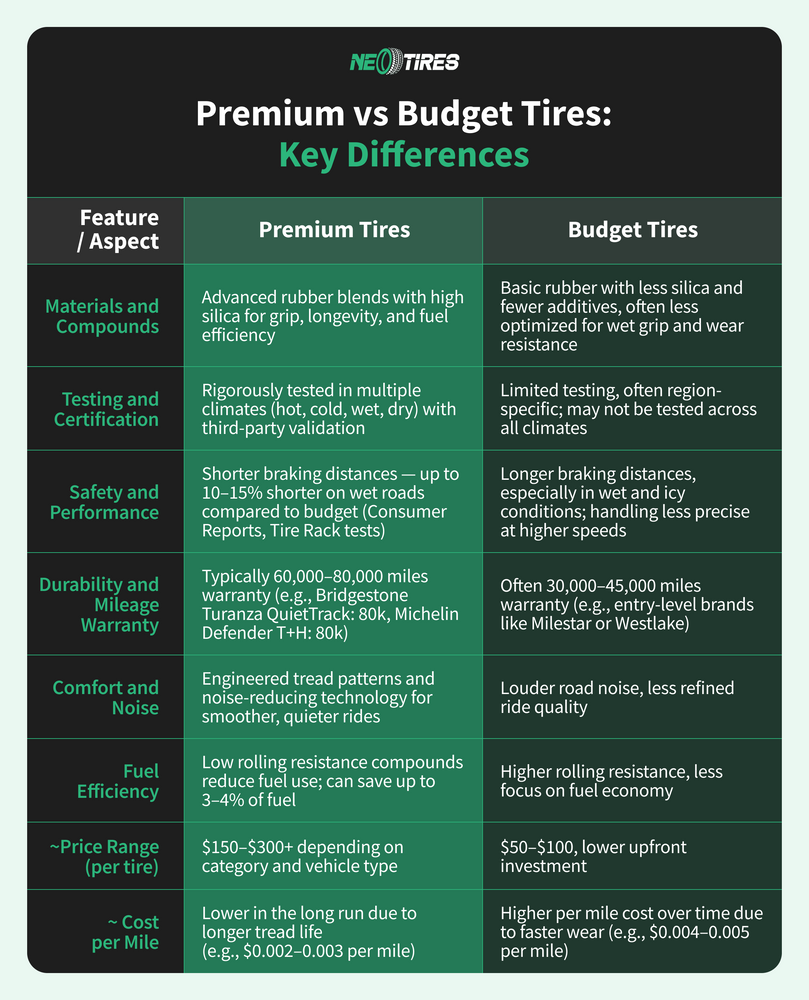
The main difference between premium and budget tires lies in the rubber compound and the additives manufacturers use during production, which result in performance differences across tire categories.
Premium tires use silica-enriched compounds and engineered polymers. These materials improve wet traction, keep the tire flexible in cold weather, and reduce rolling resistance. For instance, Michelin applies EverGrip methods that include higher silica ratios and specific oils to maintain flexibility as the tire wears. Learn about the new Michelin all-season launch: CrossClimate 3 and CrossClimate 3 Sport.
Budget tires often depend more on carbon black fillers, which contain less silica and fewer specialty additives. While using carbon black fillers lowers production costs, it results in harder rubber that loses flexibility in cold weather and heats up more under extended highway loads. This accelerates wear and reduces wet grip.
The higher silica and advanced polymers in premium tires provide better wet traction and lower rolling resistance, leading to shorter stopping distances and better fuel economy. In contrast, lower silica and carbon black mixes typically create stiffer tread, increased heat, faster wear, and poorer wet performance.
How Premium vs Budget Tires Are Tested and Certified?
Premium tire manufacturers usually conduct testing in different environments, often at U.S. proving grounds and tracks that mimic Arizona heat, Minnesota winter slush, ice, and controlled wet-braking conditions. These tests include long high-speed durability runs, heat tests under load, and assessments for wet braking and hydroplaning. The results are often verified by comparing them to findings from independent U.S. labs and tests published by Consumer Reports.
Budget tires typically meet DOT safety standards and pass required certification tests, but they often undergo limited regional testing and validation using smaller samples. Independent testing for budget tire models is often inconsistent, so their performance in various U.S. conditions is generally less proven.
In summary, more thorough and varied testing can better predict safe performance across different climates and road conditions. In contrast, limited testing might indicate acceptable performance in specific situations but brings greater uncertainty in extreme conditions. Learn more about How To Choose Tires By Climate.
Safety, Braking, and Performance of Premium VS Budget Tires
Numbers from independent U.S. test programs show the following:
- Braking distance: Independent tests (Consumer Reports / independent testing) show premium all-season and touring tires can stop 10–20 feet shorter from 60 mph on wet surfaces compared to budget options. That difference has clear safety consequences in emergency braking.
- Handling and heat buildup: Premium tire compounds handle heat buildup better, which is why premium models are generally A-rated for heat resistance. The special compounds keep the rubber intact during long highway drives, which helps maintain lateral grip. Economy tires rated B, or even C for temperature grade in their UTQG rating, lose performance more easily due to heat.
- Winter performance: Premium all-seasons (generally 3PMSF-rated) and dedicated winter tires use compound formulas and siping patterns that preserve flexibility at low temperatures; many budget all-seasons harden and lose grip below ~40–45°F (M+S rated).
Therefore, we can conclude that better compounds and validated designs aid in shorter stopping distances and more stable handling, particularly in wet and cold situations.
Warranty and Mileage Compared
Premium warranties commonly span 60,000–80,000 miles, for example: Bridgestone Turanza QuietTrack - 80,000 miles; Goodyear Assurance MaxLife - 85,000 miles, depending on model/size, or Michelin Defender T+H - 80,000 miles. (Compare Michelin Defender vs Premier for more details).
On the other hand, many budget tires provide 25,000–40,000 miles, or no mileage warranty at all. The table below presents a comparison of premium and budget tire options from a warranty and price perspective:
Tire Model (Example) | Category | Warranty (miles) | Typical U.S. Price (per tire) |
Michelin Defender T+H | Premium | 80,000 | $170–$210 |
Premium | 80,000 | $180–$220 | |
Premium | 85,000 | $160–$200 | |
Budget | 45,000 | $50–$85 | |
Budget | 50,000 | $65–$95 |
*Prices can vary by size and retailer
Premium vs Budget Tires: Mileage Difference
A full set of premium tires for a midsize sedan is about ~$760, while the expected tread life is nearly 80,000 miles. The final cost per mile is about $0.0095.
On the other extreme, a set of budget tires for the same vehicle category is nearly ~ $320. Provided that the estimated tire service life is ~35,000 miles, the final cost per mile results in $0.0091. But you’ll likely buy a second budget set within the same total mileage period, paying installation and balancing twice, plus you will possibly experience performance issues.
Also considers factors like:
- Fuel: Low rolling resistance premium tires can save 1–4% fuel (according to U.S. DOE findings).
- Safety issues: Longer stopping distance, low grip and traction in winter, and heat buildup in summer.
The point is that even when per-mile costs look similar, premium tires reduce replacement frequency and often save marginal fuel and safety risks that favor long-term value.
Understanding brand specialization can make comparing tires much easier. Explore our Tire Brands Explained guide for additional context.
Premium vs Budget: Which Should You Choose?
Apply these decision rules when choosing between budget and premium tire models:
- Choose premium if you drive often, travel on highways, face different weather conditions, or value safety and comfort.
- Choose budget only if your annual mileage is very low, you need a quick fix, or you're short on cash and okay with some compromises.
- Choose middle-ground: Consider mid-tier, well-reviewed brands, like Falken, Yokohama, BFGoodrich, Cooper, Hankook, or Kumho. For example, Kumho released a promising rugged-terrain model, the Kumho Road Venture RT, that promises superior performance at an affordable price.
Quick Recap: Premium or Budget?
Premium models generally produce shorter braking distances, longer tread life, and better all-weather predictability, which translates to greater safety and lower replacement frequency for most U.S. drivers. Budget tires have a lower upfront cost but come with trade-offs in wet braking, durability, and warranty coverage. Learn How to Make Your Tires Last Longer, regardless of their price tag.
NeoTires evaluates tires using independent U.S. test data (Consumer Reports), NHTSA guidance, and manufacturer specifications, to provide accurate advice and recommendations to drivers.
Reach out to us to help you through the process of finding the best tires tailored to your specific needs and driving conditions. We can help you find the right product that aligns with your performance expectations without forcing your wallet. Explore our catalog if you already know what you need and choose tires based on size, vehicle, brand, or seasonality.
✅ Contact NeoTires for recommendations
Drive safe and choose your tires wisely!