


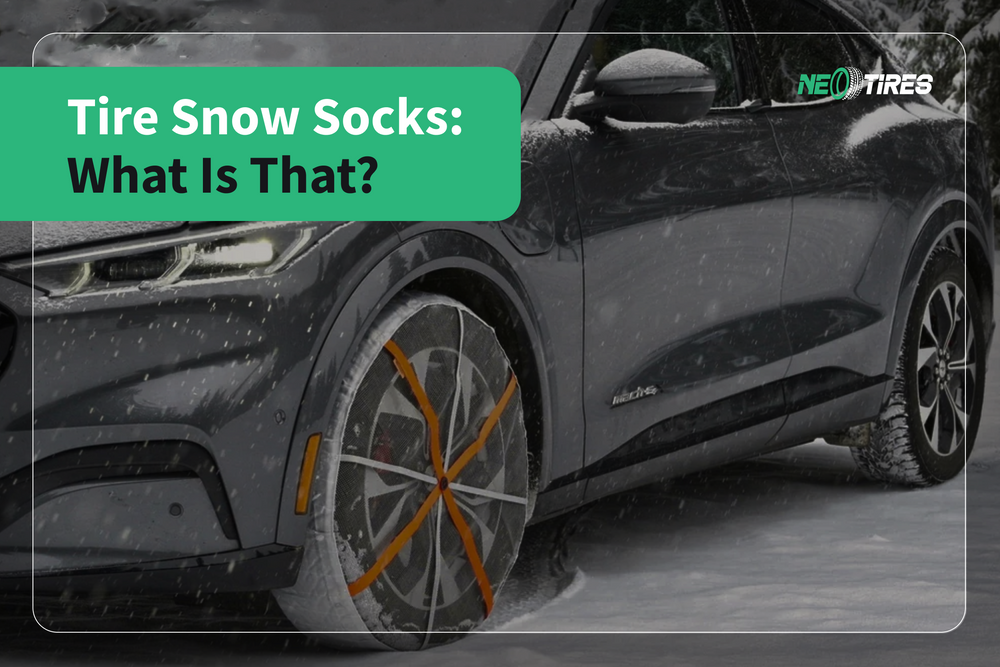
Tire Socks, otherwise known as Snow Socks, are used to increase vehicle traction in winter conditions. Snow socks for tires are an easier, quieter, and more lightweight alternative to tire chains. This guide focuses on the definition, benefits, and uses of tire snow socks, and whether they are the right winter solution for you.
What Are Tire Snow Socks?
Tire snow socks are textile-based traction aids that wrap directly over a vehicle’s tires. They are typically made from a strong, woven synthetic fabric engineered to increase friction between the tire and the road surface.
Once installed, snow socks help improve grip on snowy and slippery roads by enhancing surface contact at the tire’s contact patch. They are primarily intended for short-distance driving in light to moderate winter conditions, offering improved vehicle control when snow or slush is present.
How Do Snow Socks Work?
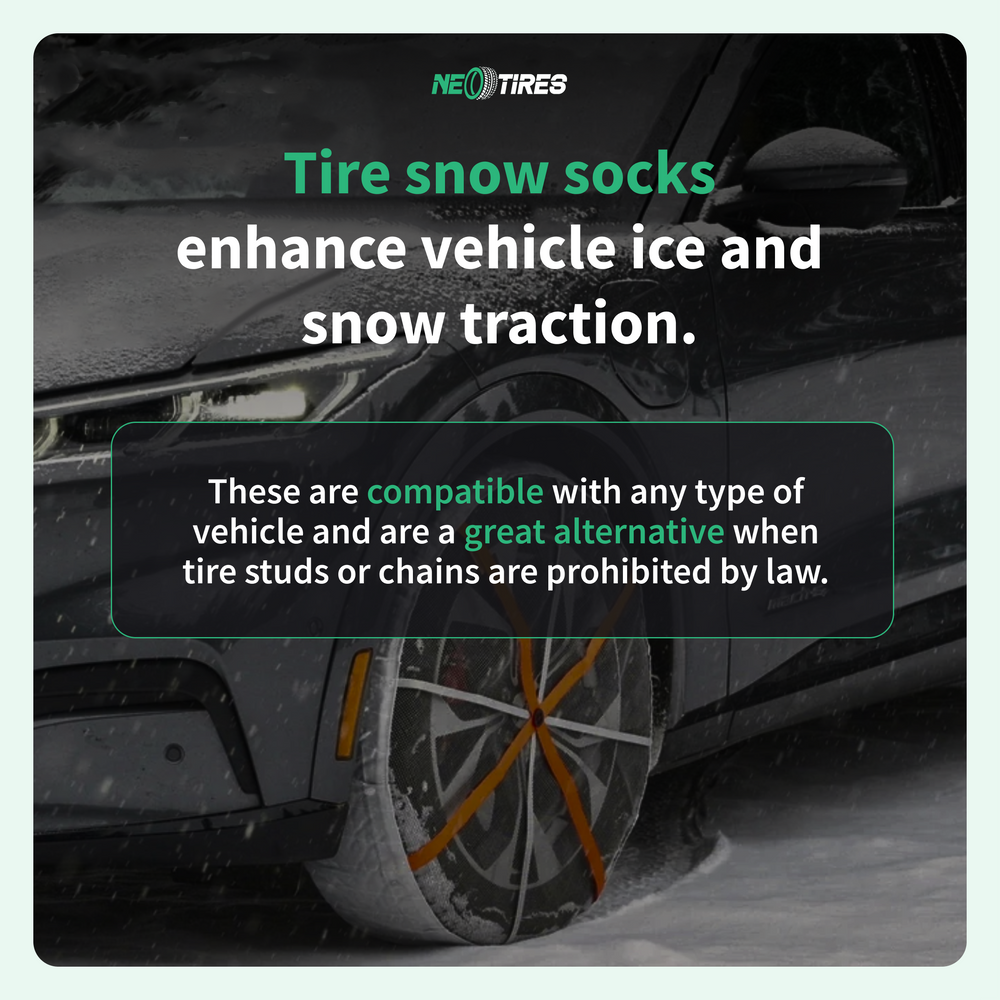
Snow socks work by interacting with snow and ice at the road surface. The fabric absorbs moisture from compacted snow and icy roads, helping to reduce the thin water film that often causes tires to slip.
As the tire rotates, snow adheres to the textile fibers of the sock, creating a “snow-on-snow” friction effect. This increases grip during low-speed acceleration, braking, and steering. While effective on fresh or compacted snow, snow socks are not designed for prolonged ice driving or high-speed use.
Benefits of Tire Snow Socks Over Chains or Studs
The benefits of tire snow socks over tire chains or studded tires include lower cost, lighter weight, simpler installation, less noise during operation, compatibility with most vehicles, and reduced impact on road surfaces.
Tire socks are often gentler on road surfaces and suspension components, and they are generally compatible with vehicles that have limited wheel-well clearance or manufacturer restrictions against chains.
In many regions, snow socks face fewer legal limitations than metal chains. Unlike studded tires, which are subject to seasonal bans or regional restrictions in some areas, snow socks are generally permitted as a temporary traction aid, making them a more universally compliant option for short-term winter use.
| Feature | Tire Snow Socks | Tire Chains |
| Ease of Installation | Very Easy | Difficult |
| Weight | Lightweight | Heavy |
| Road Noise | Quiet | Noisy |
| Vehicle Compatibility | Suitable for most vehicles | May damage some tires |
| Surface Damage | Gentle on roads | Can damage asphalt |
| Cost | Affordable | Moderate to High |
Why Choose Tire Snow Socks?
Tire snow socks are best suited for drivers who encounter occasional snow or need an emergency traction aid. They are commonly used for short winter trips, urban driving, or unexpected weather changes.
Key reasons drivers choose snow socks include:
- Fast and tool-free installation
- Quiet, vibration-free operation
- Compatibility with most vehicles, including low-clearance models
- Reduced risk of tire and road damage
- Fewer legal restrictions compared to chains or studs in many areas
How to Install Tire Snow Socks
To install tire snow socks, park the vehicle in a safe place. Position the sock, stretch it over the tire top, and pull it down. Roll the vehicle slightly forward to fully cover the tire. Ensure a secure fit by adjusting the sock for even distribution around the tire tread. Remove the tire socks when reaching clear roads.
Best Tire Snow Socks for Winter 2025
Popular snow sock choices available in the U.S. market include AutoSock, ISSE Classic, and Michelin Easy Grip, which are known for ease of installation, durability, and traction on snow-covered roads. TÜV certification indicates that snow socks meet recognized safety and traction standards in both the U.S. and Europe. Consider the following tire sock options in the U.S.:
| Brand | Key Features | Price Range |
| AutoSock | Best for passenger cars, TÜV certified | $80-$120 |
| ISSE Classic | High durability, reusable fabric | $70-$100 |
| Michelin Easy Grip | Great traction, fast installation | $90-$130 |
*TÜV certification for tire snow socks means they are legally approved for effective traction in snow and ice in the U.S. and Europe.
Are Snow Socks As Good As Chains?
Snow socks are effective for occasional winter driving but are not as durable or capable as tire chains in extreme conditions. Tire chains provide a stronger mechanical grip on deep snow and ice, making them better suited for mountainous terrain or severe winter environments.
Snow socks perform best in light snow and moderate winter conditions where ease of use and road friendliness are prioritized over maximum traction.
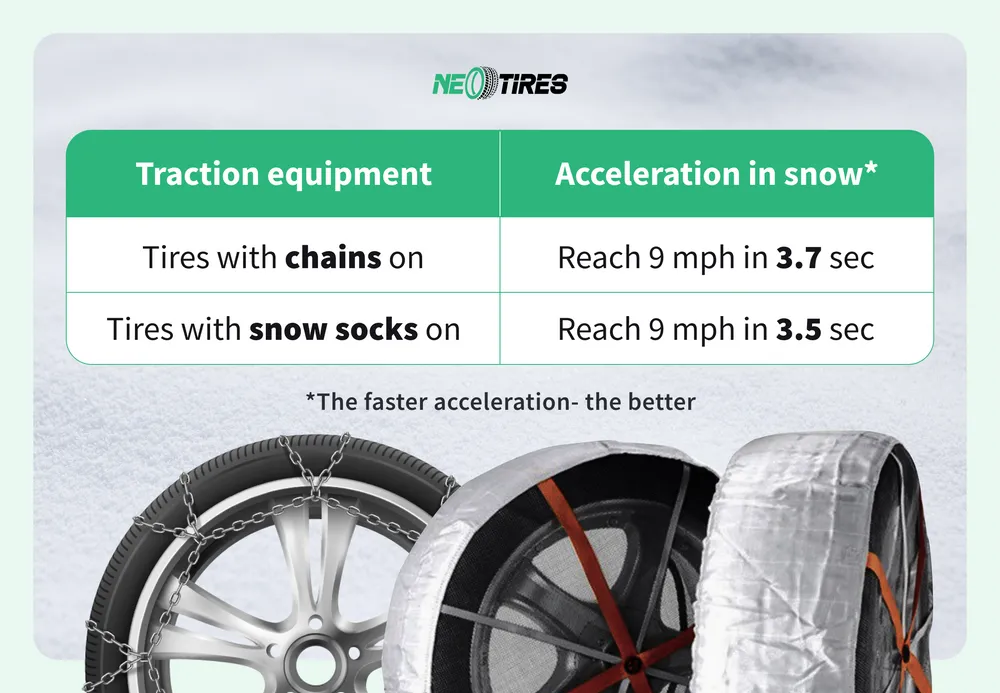
Tire Chains VS Socks In Snow Acceleration
Tests comparing acceleration on snow with tire chains vs tire socks show the following results:
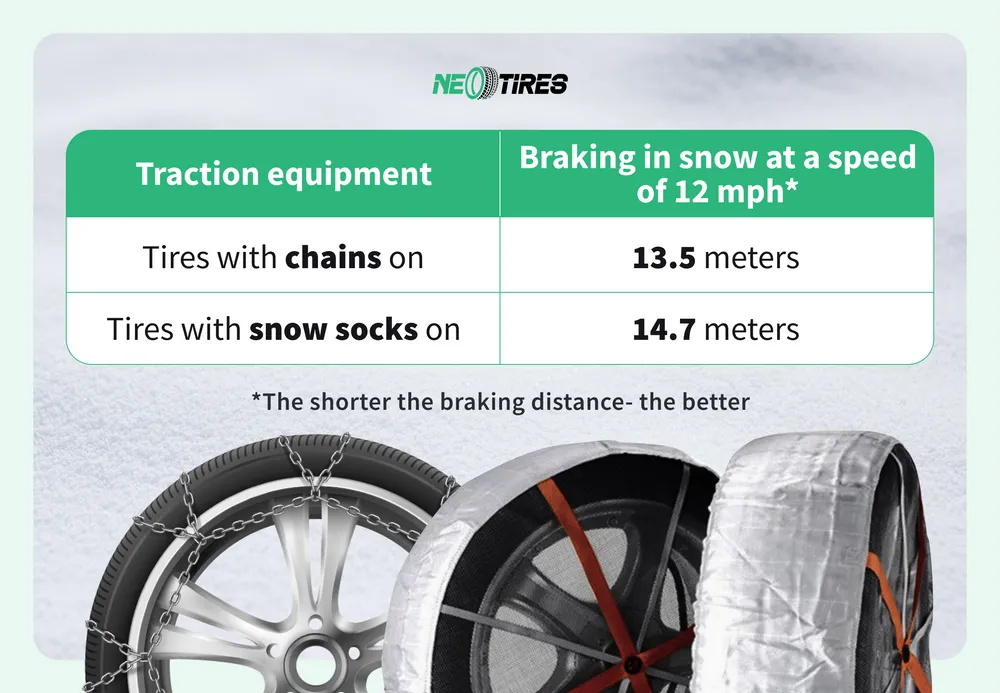
Tire Chains VS Tire Socks In Snow Braking
Tests comparing braking on snow with tire chains vs tire socks show the following results:
Tire Chains VS Tire Socks In Ice Acceleration
Tests comparing acceleration on ice with tire chains vs tire socks show the following results:

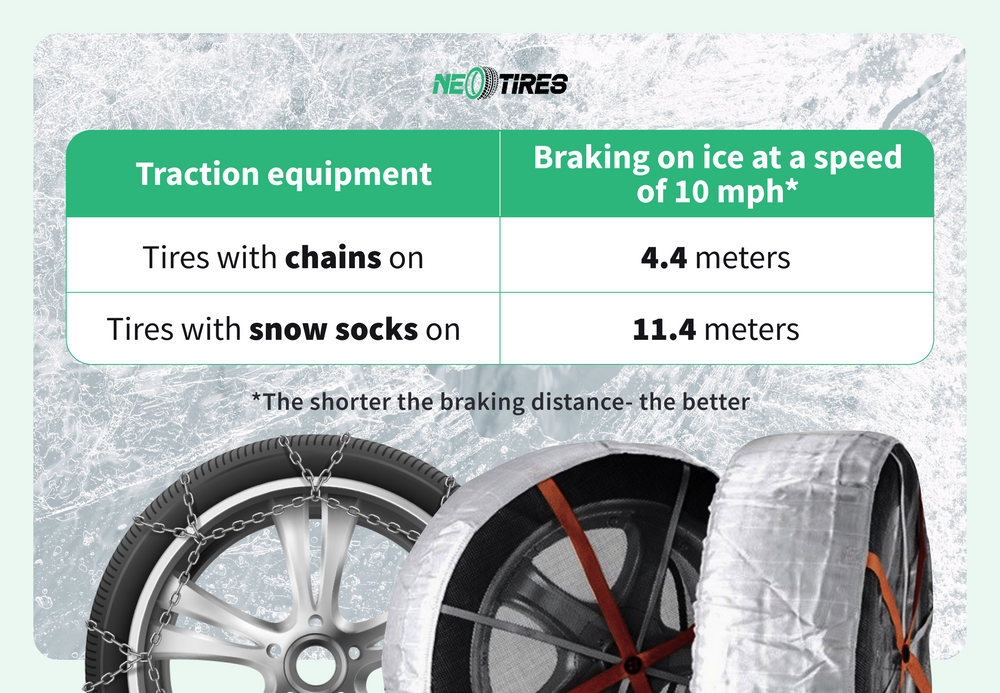
Tire Chains VS Tire Socks In Ice Braking
Tests comparing braking on ice with tire chains vs tire socks show the following results:
Snow Socks vs Studded Tires: Performance and Practical Differences
While both snow socks and studded tires improve winter traction, they serve different purposes. Snow socks are temporary traction aids meant for short-term use. Studded tires, such as Nokian Hakkapeliitta 10, are dedicated winter tires designed for ongoing driving in harsh winter conditions.
Traction and Braking Performance
Snow socks greatly improve traction compared to regular all-season tires on snowy roads. However, the effectiveness of socks on ice is limited. Studded winter tires have metal studs that grip directly into ice. Research on transportation safety indicates that studded tires can reduce braking distances on icy surfaces by about 15% compared with non-studded winter tires, depending on conditions, results that tire socks are incapable of. This benefit is most apparent on polished ice, freezing rain, and packed snow.
Durability and Driving Range
Snow socks are generally meant for short distances and low speeds, up to 30 mph. Extended use or driving on dry pavement causes rapid wear. Studded tires are built for whole winter seasons and thousands of miles. Studded tires' robust construction helps them maintain consistent traction across various winter road conditions without requiring frequent removal or reinstallation.
Snow Socks vs Studded Tires: When Each Option Makes Sense
Use Case / Driving Need | Snow Socks | Studded Tires |
Typical winter exposure | Occasional or unexpected snow | Regular to harsh winter conditions |
Primary purpose | Temporary or emergency traction | Continuous winter driving |
Road conditions | Light to moderate snow | Ice, packed snow, frozen roads |
Driving distance | Short trips, urban use | Long distances, daily driving |
Terrain | Flat or city roads | Rural, northern, or mountainous areas |
Seasonal severity | Mild or intermittent winters | Long winters with freeze-thaw cycles |
Vehicle compatibility | Suitable for vehicles that cannot use chains | Requires seasonal legality and a compatible vehicle setup |
Driver priority | Convenience and quick installation | Maximum braking, steering, and control, especially on icy surfaces |
For a detailed breakdown of studded tire performance, legal regulations, and winter driving benefits, see our full guide: Studded Tires Guide: Laws, Benefits, and Performance Review
Tire Snow Socks: A Convenient Winter Backup
Snow socks offer a simple and effective way to improve traction during snowy events or unexpected winter conditions. They are best used as a temporary or emergency solution, especially for drivers who need quick installation, quiet operation, and broad vehicle compatibility.
However, for drivers who regularly face icy roads, extended winter seasons, or demanding conditions, dedicated winter tires - including studded options where legal - provide more consistent traction, braking performance, and long-term durability.