
Why share your location?

Better pricing

Faster delivery

Verified local shops
Buy Tires by Size – Browse All Tire Sizes & Find the Right Fit
Find your exact tire size or explore all available sizes in stock. Check overall diameter, sidewall height, approved rim width ranges, and vehicle fitment before choosing the right replacement.
Browse Tire Sizes by Wheel Diameter
Find tire sizes grouped by rim diameter (20", 21", 22", etc…). Choose a rim size to compare overall diameter, width ranges, approved rim fitment, and view available tires in stock.
Most popular 17" tire sizes
View allWhere To Find Tire Size
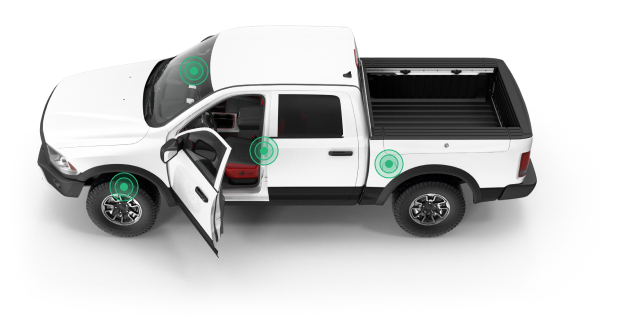
Your tire size is specified by the manufacturer and can be found in the following places:
- On the Tire Sidewall – The sequence of markings on your tire's sidewall indicates the width, aspect ratio, and diameter (e.g., 225/65R17).
- On the Driver's Side Door Jamb – A sticker inside your driver's door lists the correct tire size for your vehicle.
- In the Owner's Manual – The recommended tire size is mentioned in your car's manual. There, you'll also find all the necessary info you need to know about downsizing or upsizing.
- Within Your Gas Tank Hatch – The size of your OE tires is shown on the tank hatch sticker. You can choose the same size for your new tires.
How To Read Tire Size
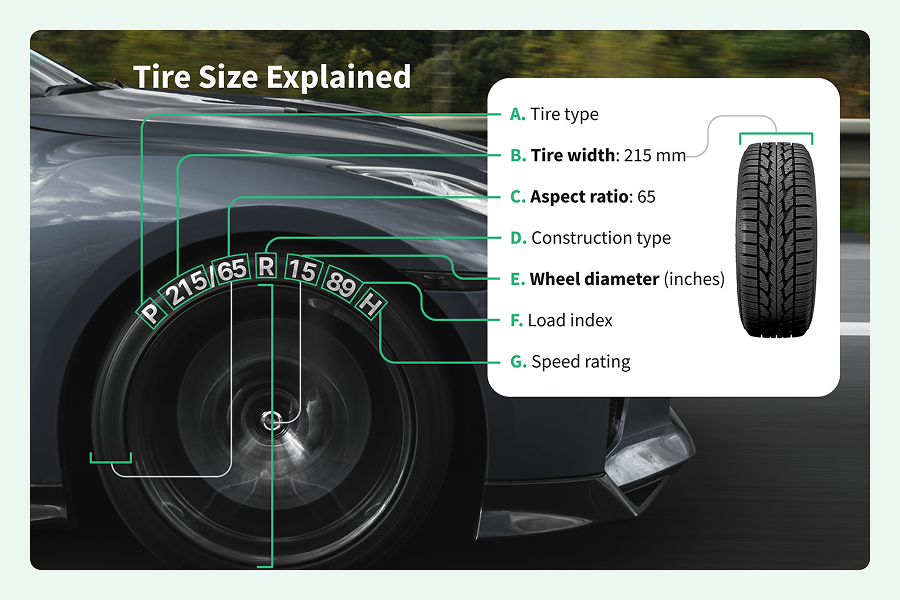
Understanding tire size markings ensures you get the right fit for your vehicle. The numbers on a tire sidewall (e.g., 225/65 R17) represent the tire width, aspect ratio, construction type, and wheel diameter. For a detailed guide, check out our full article on How to Read Tire Size.
Shop Tires by Size – The Easy Way
To simplify your search, our tire size tool lets you quickly find the right fit for your vehicle. Just enter your tire size (width, aspect ratio, and diameter), and we'll show you the best tire options available.
Not sure which OE tire size your vehicle uses? A VIN lookup can help identify the factory-approved tire sizes associated with your vehicle. Read How VIN Lookup Reveals Your Factory Tire Fitment to learn how it works.
Why You Shouldn't Make Critical Changes in Tire Size
You might want to alter tire size for aesthetic reasons or performance enhancements. However, changing your tire size can significantly impact your vehicle's safety and efficiency. Here's why:
Handling & Stability
An incorrect size can cause poor grip, longer braking distances, and unstable cornering.
Speedometer & Odometer Accuracy
A larger or smaller tire affects your speed reading and mileage tracking.
Suspension & Alignment Issues
Tires too large or too small may strain your vehicle's suspension and lead to misalignment.
Warranty & Insurance Risks
Some manufacturers and insurers may void warranties if the incorrect tire size is used.
Unless you're making modifications with professional guidance, it's best to stick with your recommended tire size.
Common Tire Size Mistakes to Avoid
Most tire size errors come from exceeding overall diameter (OD) limits, selecting an incorrect load index, or creating drivetrain mismatches (especially on AWD vehicles).
Exceeding the ±3% overall diameter range
A change in overall diameter alters how far the tire travels per rotation. At highway speed, a ~3% difference can shift the speedometer by about 1.8 mph and affect how vehicle systems interpret wheel speed. While ±3% is commonly used as a replacement limit, some AWD setups operate within narrower tolerances. Learn more about the 3% Rule in our dedicated guide.
Using an incorrect load index (even within the same size)
The same tire size can carry different load ratings depending on construction. For example, a 265/70R17 in P-metric form may have a lower load index than an LT version of the same size. On trucks and SUVs, P-metric tires are also de-rated when used in light-truck service, further reducing their effective capacity. Choosing a tire with a lower load index than the original specification can lead to increased heat buildup under load and reduced safety margins.
Running mismatched diameters on AWD vehicles
Differences above ~1% in overall diameter force constant drivetrain compensation, accelerating wear in differentials and transfer cases. Note that even correctly sized tires can cause the same issue if tread depths are significantly mismatched — another reason AWD vehicles typically require full sets when replacing tires. Always verify the exact OD tolerances in your vehicle's owner's manual.
Using widths outside the approved rim range
Mounting a tire on a rim that is too narrow or too wide changes how the sidewalls sit and how the tread contacts the road. This can reduce stability, alter steering response, and lead to uneven wear across the tread. Always keep the tire size within its published rim width range.
Need live support?
- Mon - Fri: 8am - 7pm ET
- Sat: 9am - 5pm ET
- Sun: Closed