


Wheel offset is one of those specs that buyers often treat as an optional detail - something to check after diameter and bolt pattern are confirmed. In practice, it is the measurement that most frequently causes aftermarket wheels to rub, alter steering feel, or sit in the wrong position, even when everything else on paper looks correct.
This guide explains what wheel offset is, how the three types differ, how to measure it, and what happens when it is pushed too far in either direction. For context on how offset fits within the full set of specs that determine whether a wheel is a safe fit, see our Aftermarket Wheel Fitment Guide.
What is Wheel Offset?
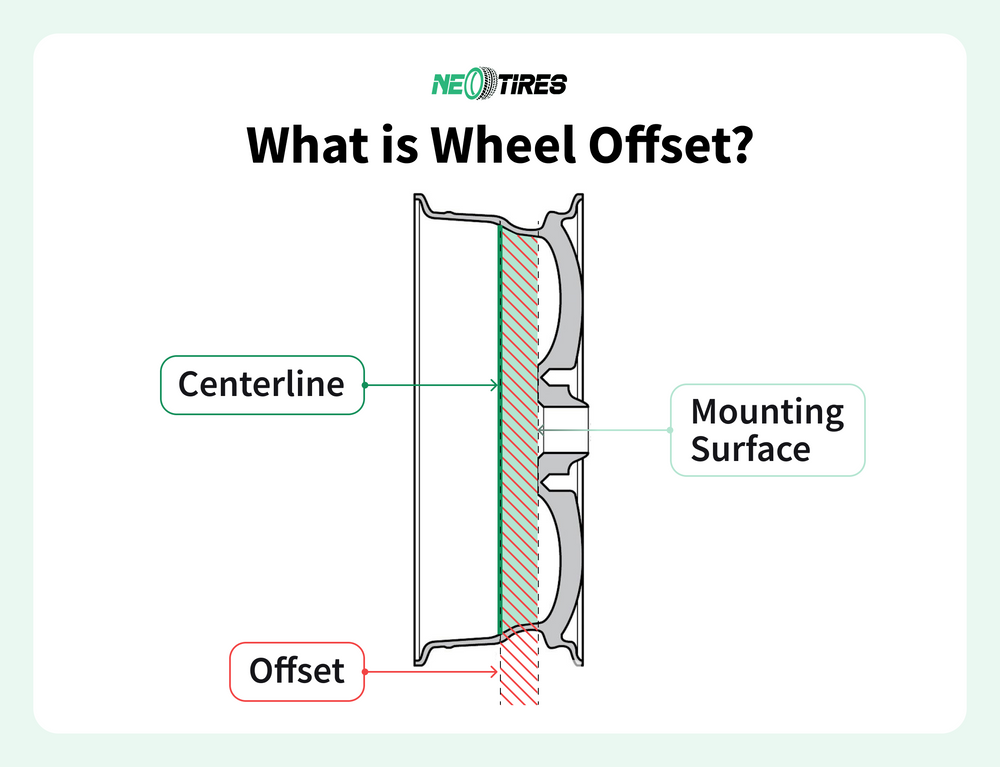
Wheel offset is the distance - measured in millimeters - between the wheel's hub-mounting surface and its centerline. It determines how far inward or outward the wheel sits on the hub once it is bolted to the vehicle.
Two wheels can share the same diameter, width, and bolt pattern and still sit in completely different positions inside the wheel well, depending on their offset. That difference in position affects how close the inner barrel sits to suspension components, how far the outer lip extends toward the fender, and how the load path from the wheel to the bearing is angled. Offset is not a styling detail - it is a structural and clearance measurement.
The Three Types of Wheel Offset
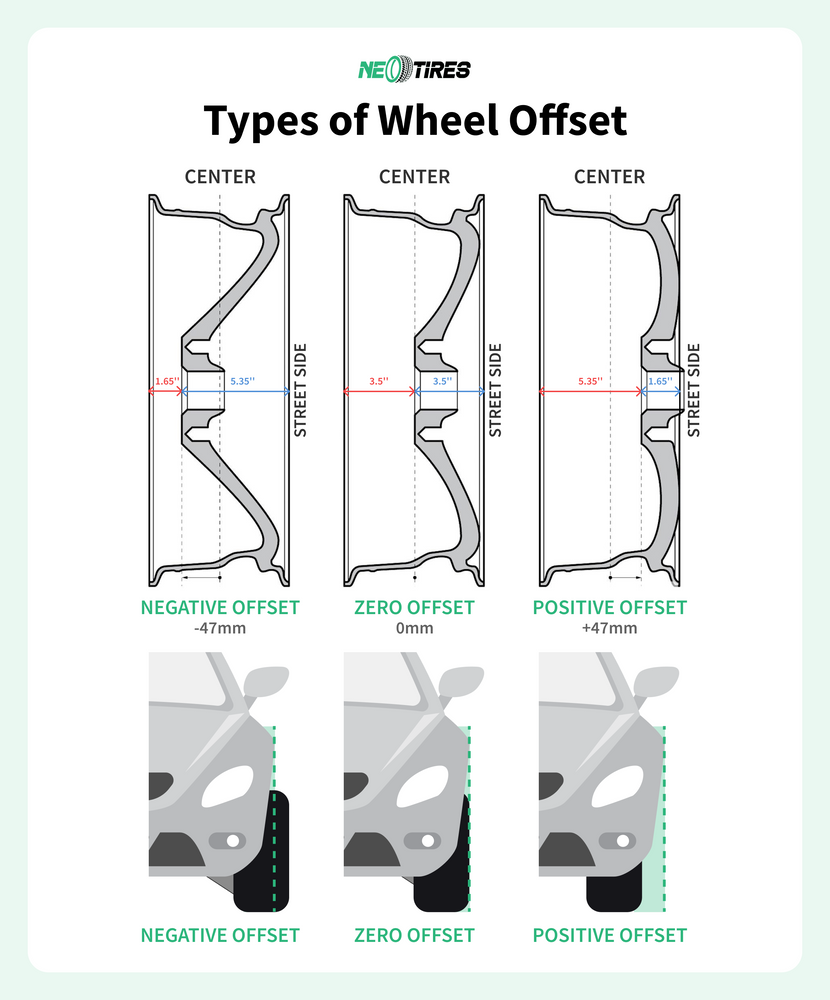
Offset is expressed in millimeters and referenced from the wheel's centerline. Zero offset is the baseline - the point at which the mounting surface sits exactly at the center of the wheel's width. Positive and negative offsets are both measured as departures from that reference point.
Zero Offset
Zero offset means the hub-mounting surface aligns exactly with the centerline of the wheel. The wheel sits with equal barrel depth on both sides of the mounting pad. While less common in modern passenger car applications, zero offset appears in some performance builds and custom fitments where a neutral wheel position is specifically required.
Positive Offset
Positive offset means the hub-mounting surface is positioned toward the front (street side) of the wheel, ahead of the centerline. This pulls the wheel inward - closer to the suspension and further inside the wheel well. The higher the positive offset number, the further inward the wheel sits.
Positive offset is the standard configuration for most modern front-wheel-drive and all-wheel-drive passenger cars, crossovers, and SUVs. Factory offset on these platforms typically runs between +35 and +50 mm, a range that keeps the wheel positioned correctly within the wheel well while maintaining adequate inner clearance around struts, knuckles, and brake hardware.
Negative Offset
Negative offset means the hub-mounting surface sits behind the centerline, toward the back of the wheel. This pushes the wheel outward - away from the suspension and toward the fender edge. The result is a wider visual stance and a broader effective track width.
Negative offset is most common on off-road trucks, some older platforms, and custom builds where a wider stance is specifically intended. On vehicles originally designed for positive offset, switching to a significantly negative offset changes the load path to the wheel bearing, increases the scrub radius, and can noticeably alter steering response.
| Type of Wheel Offset | Description | Common Applications |
| Positive Offset | The hub-mounting surface is closer to the wheel's face (outside). | Commonly found in FWD and AWD vehicles |
| Negative Offset | The hub-mounting surface is closer to the back of the wheel (inside). | Seen in off-road vehicles and some sports cars |
| Zero Offset | The hub-mounting surface is exactly at the wheel's centerline. | Rare, used in custom builds or some performance cars |
Types of Wheel Offset: positive, negative, zero offsets, and their common applications
How Offset and Wheel Width Work Together
Offset does not operate in isolation - it always interacts with wheel width, and understanding that relationship prevents the most common fitment miscalculations.
When wheel width increases, the wheel expands in both directions from the centerline: roughly half the added width moves inward, and half moves outward, before offset is even considered. A change from an 8" wide wheel to a 9" wide wheel at the same offset does not just mean a wider tire. It also moves the inner barrel approximately 0.5 inches (12.7 mm) closer to the suspension and pushes the outer lip approximately 0.5 inches (12.7 mm) closer to the fender.
This is why a buyer who calculates offset correctly but increases width at the same time can still end up with a rubbing wheel - the width change shifted the clearance picture on both sides simultaneously. Width and offset have to be evaluated together, not in separate steps.
How to Measure Wheel Offset
To measure the wheel offset, you need to find the wheel width, calculate the centerline, measure the distance from the hub-mounting surface to the back wheel edge, and calculate the offset by subtracting the centerline measurement from the hub-mounting surface distance.
To measure the wheel width, first remove the wheel from the vehicle and use a measuring tape (or caliper) to find the distance from the outer lip to the other. Further on, divide the total wheel width by two to calculate the centerline. Then find the hub-mounting surface and measure the distance between the surface (the flat part where the wheel attaches to the hub) to the back edge of the wheel (inner lip). To calculate the offset, make the subtraction between the centerline measurement and the hub-mounting surface distance.
| Measurement Step | Value |
| Measure Total Wheel Width | 8 inches |
| Calculate Centerline (Wheel Width ÷ 2) | 4 inches |
| Distance: Hub-mounting surface to Edge | 5 inches |
| Offset Calculation | 5 inches – 4 inches = +1 inch |
| Offset (inch & mm) | Positive offset of +1 inch/ +25 mm |
Example of a wheel offset measurement
As a general guideline, the offset is positive if the measurement shows the hub-mounting surface is in front of the centerline. If the hub-mounting surface is behind the centerline, it is a negative offset. The offset is typically zero if it is exactly at the centerline. Some manufacturers may indicate the offset on the back of the wheel, so you may not need to measure it manually.
What Happens When Offset Is Wrong
Offset errors fall into two categories: too much positive offset and too much negative offset. Both cause real problems, and neither is simply a visual or stance issue.
Too Much Positive Offset
When the offset is pushed significantly higher than the vehicle's designed range - generally above +60 mm on platforms not intended for it - the wheel moves too far inward. Common consequences include:
Brake caliper contact - the inner spokes or barrel of the wheel can contact the caliper body when the offset pulls the wheel too close to the brake assembly. This is a hard clearance failure that prevents safe installation entirely, or causes contact only at full steering lock or under suspension compression.
Suspension interference - struts, control arm hardware, and inner fender liners all have fixed positions. A wheel sitting too far inward runs out of clearance faster than expected, particularly when the suspension compresses under load or during cornering.
Bearing load shift - offset that differs significantly from the designed range changes the angle of the load path from the wheel to the hub bearing. This increases the bending moment on the bearing, which accelerates wear over time rather than causing an immediate failure.
Too Much Negative Offset
When offset goes significantly negative - pushing the wheel outward beyond the vehicle's intended range - a different set of problems follows:
Fender rubbing - the outer tire shoulder contacts the wheel arch under steering lock or suspension compression. This can be intermittent at first and become constant as tires wear or suspension settles.
Scrub radius increase - negative offset widens the scrub radius, which is the distance between the steering axis and the tire's contact patch center. A wider scrub radius makes the steering more sensitive to braking forces and road surface variations, producing a pull or darting sensation that becomes more pronounced on uneven pavement.
Steering instability under braking - the combination of increased scrub radius and altered load path can create brake steer: a tendency for the vehicle to pull to one side when braking hard, particularly if brake force is uneven side to side.
Accelerated wheel bearing wear - same mechanism as excessive positive offset, different direction. The load path angle increases, and the bearing carries a higher effective load than it was designed for.
The practical takeaway is that offset errors are not cosmetic problems that can be tolerated. They affect steering behavior, component longevity, and in some cases create clearance failures that are only discovered under real driving conditions - not in a static driveway inspection.
Choosing the Right Offset for Aftermarket Wheels
For most daily-driven passenger cars, crossovers, and SUVs, the safest approach is to stay within approximately ±10 mm of the factory offset when selecting aftermarket wheels at the same width. This preserves the vehicle's designed clearances, keeps steering geometry within its intended range, and avoids placing additional stress on wheel bearings.
If increasing wheel width at the same time, which is common in aftermarket upgrades, the offset may need to be adjusted to compensate for the inward and outward shift that added width introduces. This is where running the full width-and-offset calculation together, rather than separately, prevents the most common clearance mistakes.
When in doubt, confirm the specific offset range for your vehicle application before ordering. A wheel that looks right in a fitment database but sits at the edge of the usable offset range will behave differently in practice than one centered within it - especially under load, during cornering, and at suspension extremes.
Offset, Width, and the Full Fitment Picture
Offset is one of seven specs that determine whether an aftermarket wheel fits correctly. Confirming offset alone is not enough - center bore, lug seat type, load rating, and brake clearance all require separate verification before a fitment is confirmed safe.
The full sequence, and what each spec controls, is covered in our Aftermarket Wheel Fitment Guide. If you are working through a specific wheel selection and want to verify the complete fitment before ordering, that is the right place to start.
Get the Right Wheel Fit with NeoTires
Understanding wheel offset is essential for making the right tire choice to ensure handling, performance, and safety. Whether you need a custom setup or factory specs, the right offset makes the difference. Need wheels that just fit right with your offset? Browse our catalog or reach out for expert guidance!