


Get to know the different types of tires and how they match your driving needs. This blog section breaks down several options like tire seasonality and terrain specifics. Here, we explain their unique features and what makes them ready for every road, and the weather conditions you mostly drive in. With this guide, your decision-making process in choosing the perfect match for your needs becomes easier.
Published on: Wednesday, March 19, 2025 Last updated on: Monday, January 26, 2026
The transportation industry relies on commercial tires when powering tractor-trailers, semi-trucks, and heavy-duty vehicles to tackle long distances and face challenging conditions. Any driver knows that choosing the right truck tires makes a big difference in load capacity, fuel efficiency, and overall vehicle performance.
Published on: Wednesday, April 9, 2025 Last updated on: Monday, January 26, 2026
An off-road tire is the best solution for jagged rocks and non-paved surfaces. Yet, not all offroading tires are equal. While some deliver superior control in trail crawling, others are better for drivers who split their driving time between uneven and highway roads. This section is about the difference between off-road tires and off and on-road tires, what off-roading products serious off-paved adventurers choose, and how to pick the right tire size for your vehicle.
Published on: Thursday, September 4, 2025 Last updated on: Wednesday, November 26, 2025
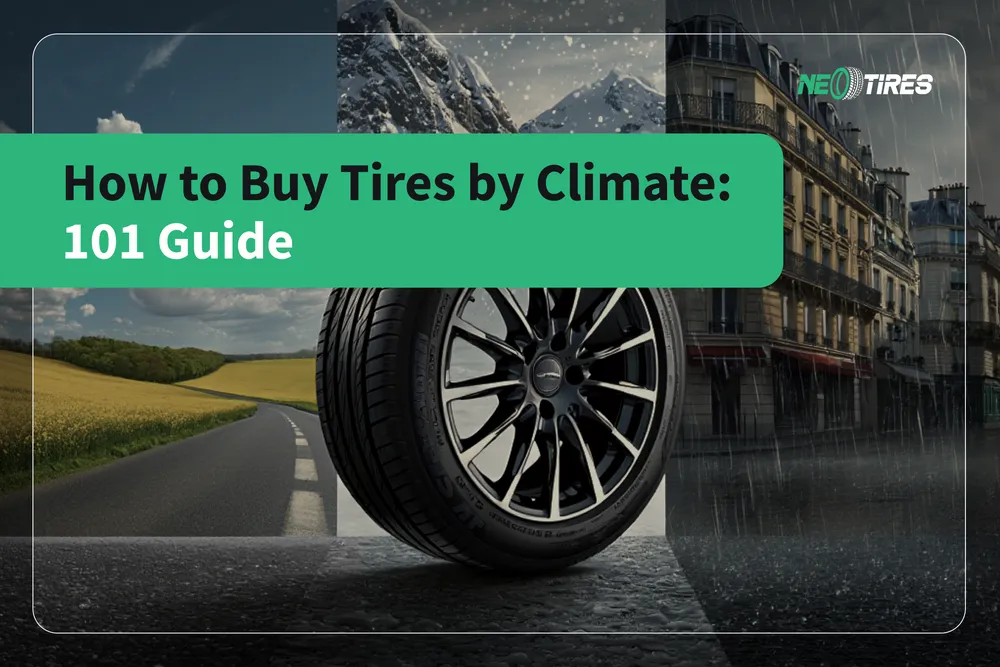
The climate in which you typically drive is one of the main factors that influence tire performance. Diverse climate conditions, such as dry or wet, hot or cold, impact tire longevity, braking distance, handling, and grip on various road surfaces. The rubber formula in different types of tires, such as summer, all-season, or winter tires, responds differently to temperature changes.
Published on: Wednesday, October 22, 2025 Last updated on: Tuesday, December 2, 2025
Tire wear on gravel and rough roads isn't a new issue. As far back as 1926, the Highway Research Board noted that driving on gravel could cut tire life by as much as 50% compared to smooth pavement. Sharp rocks, loose gravel, and constant cuts can wear down tires faster and increase the chances of punctures. In this guide, we'll show you what makes a tire durable on gravel and uneven surfaces, how to judge trade-offs, and which real models deliver strong longevity in gravel conditions.
Published on: Tuesday, October 28, 2025 Last updated on: Friday, November 28, 2025
Run-flat tires for passenger cars, SUVs, and light trucks are designed to keep your vehicle moving even after a puncture, typically for up to 50 miles at speeds up to 50 mph. Understanding how run-flat tires work begins with their structural design: Instead of going completely flat when air escapes, run-flat tires maintain enough structural integrity to support the vehicle’s weight temporarily. This technology gives drivers time to reach a repair shop safely, without pulling over on the roadside immediately to replace the flat tire.
Published on: Thursday, December 11, 2025 Last updated on: Tuesday, December 23, 2025
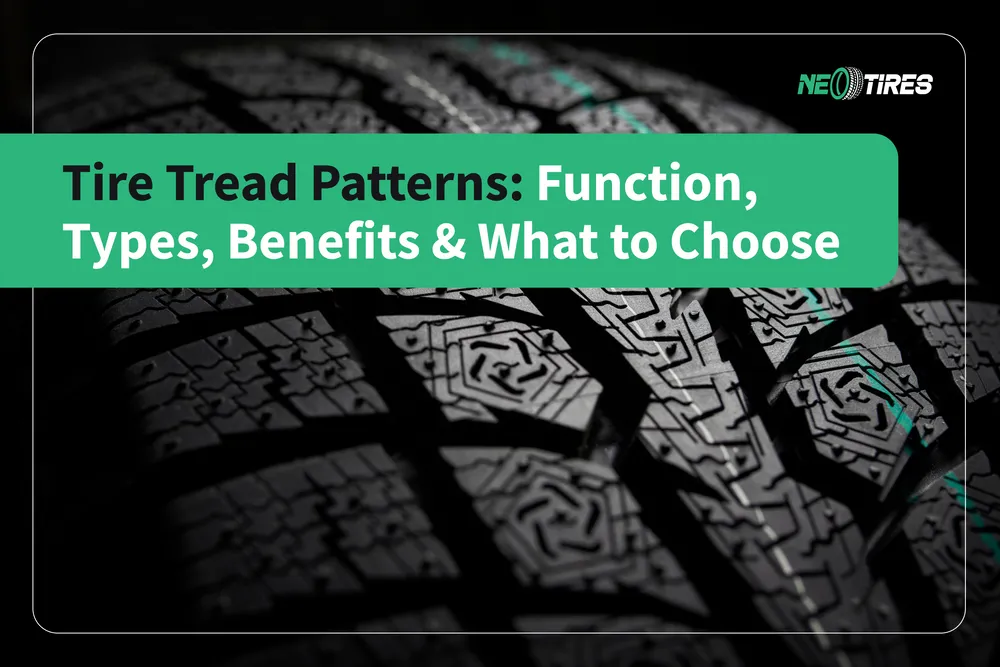
Tire tread designs are vital for safety, performance, and efficiency. Whether on wet highways or snowy backroads, the interaction between a tire and the road surface affects grip, stopping distance, handling, and even fuel consumption. In this guide, we outline the primary tread patterns and discuss how they influence traction, noise levels, and fuel efficiency. We also offer practical advice on selecting the appropriate tire for your vehicle and driving environment.
Published on: Wednesday, January 14, 2026 Last updated on: Friday, January 23, 2026
This guide explains how trailer tires differ from passenger and light truck tires, which types are best for different trailers, and how to choose the correct size, ply rating, and load capacity. This article will give you the full context needed to make a safe and informed decision if you are considering common sizes such as 205/75R15, 225/75R15, or 235/80R16, or researching travel trailer tires and heavy-duty 14-ply-rated options.
Need live support?
- Mon - Fri: 8am - 7pm ET
- Sat: 9am - 5pm ET
- Sun: Closed
Customer service
Special offers
Tire sizes
Vehicles
Join our mailing list
Subscribe for updates and promotions.
Wait...