


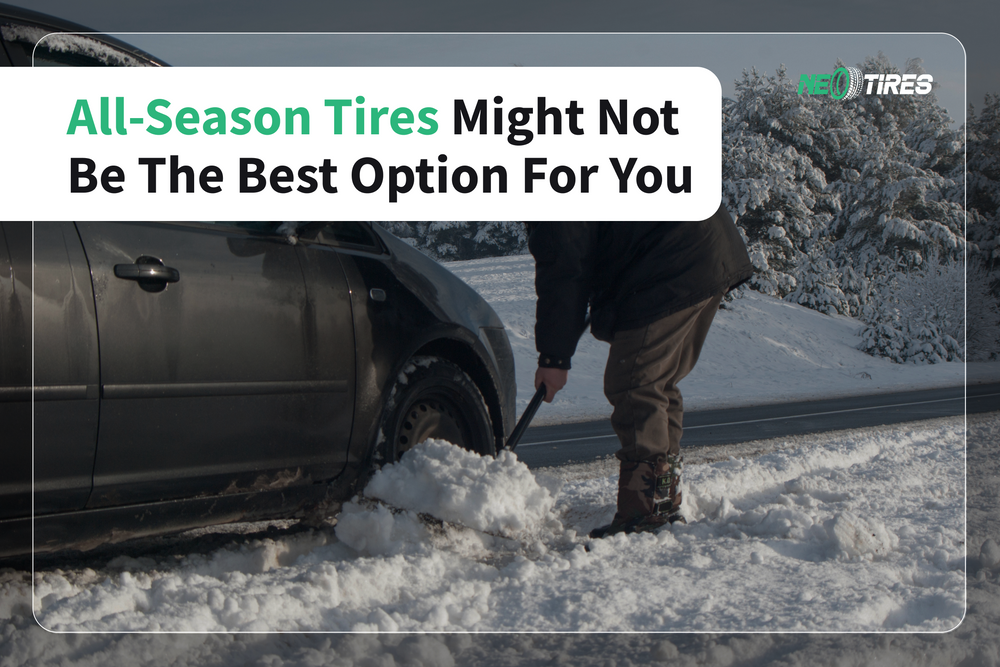
All-season tires are often a solution for moderate climates, working well in dry and wet conditions. However, AS tires often fall short in extreme weather conditions, such as temperatures below zero, icy roads, and heavy snow. The National Highway Traffic Safety Administration (NHTSA) states that winter roads lead to nearly 17% of all vehicle crashes in the U.S. each year. Tire grip plays a crucial role in braking distance and driving control. Tests from Consumer Reports and Tire Rack show that a car with winter tires can stop up to 30% shorter on snow and ice compared to the same vehicle with all-season tires.
If you live in areas with severe winters, heavy rain, or very hot summers, depending only on all-season tires can result in longer braking distances, poorer handling, and quicker tire wear. In this article, we’ll discuss when all-season tires perform well, when they do not, and which alternatives, such as winter, summer, or all-weather tires, could keep you safer and save you money over time.
Are All-Season Tires Worth Buying?
Yes, all-season tires are worth buying if your driving conditions include moderate climates (45°F -85°F), no extreme weather, and urban roads with no demanding driving conditions.
On the other hand, all-season tires are not worth buying if you drive in areas with heavy snow and freezing temperatures, own an ultra-high-performance car requiring performance tires, or often drive on challenging road surfaces like gravel and rocks. Winter-specific tires, performance tires, or all-terrain tires suit these driving conditions better compared to all-season options.
Are All-Season Tires Safe in Snow and Winter Driving?
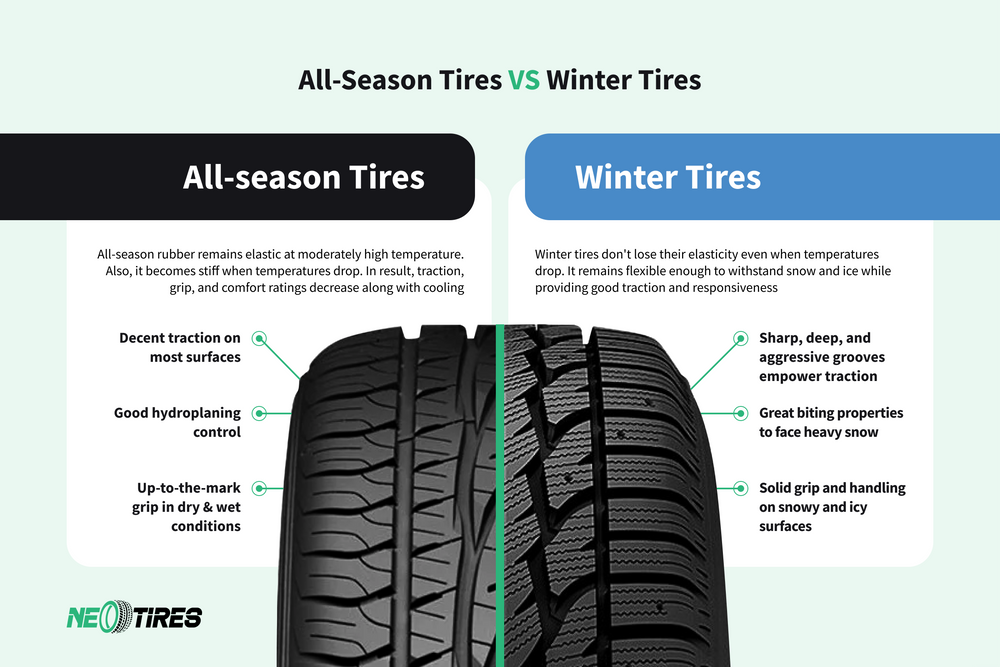
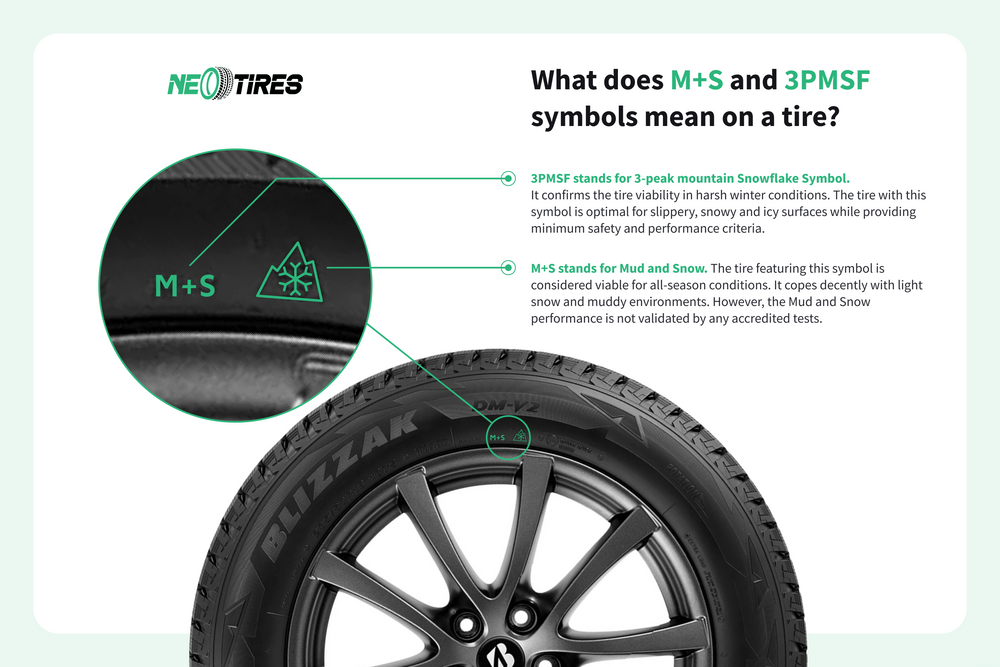
All-season tires offer limited safety in snow and winter conditions compared to dedicated winter tires, leading to serious risks in performance that affect vehicle stopping ability and handling. Braking distance can increase three times on snow compared to dry pavement with all-season tires in snow. The standard marking "M+S" found on most all-season tires suggests their limited use only for light snow conditions.
All-season tires perform significantly better than summer tires in snow conditions. However, winter tires consistently outperform both. If you need to drive in snowy conditions, winter tires surpass most all-season and all-terrain tires in stopping and starting ability, as the rubber compound of all-season tires becomes rigid in temperatures lower than 45°F, resulting in poor grip.
All-Season vs Winter Tires: Performance Tests on Ice
4 tire models have been tested for performance on ice to determine their braking distance measured in meters:
Nokian Hakkapeliitta 10 - one of the most competitive studded tires in the market
Antares Grip 60 Ice - affordable studded tire
Continental VikingContact 7- studless winter tire
Continental AllSeasonContact- all-season tire
The results of the ice braking tests of each model are shown in the image above:
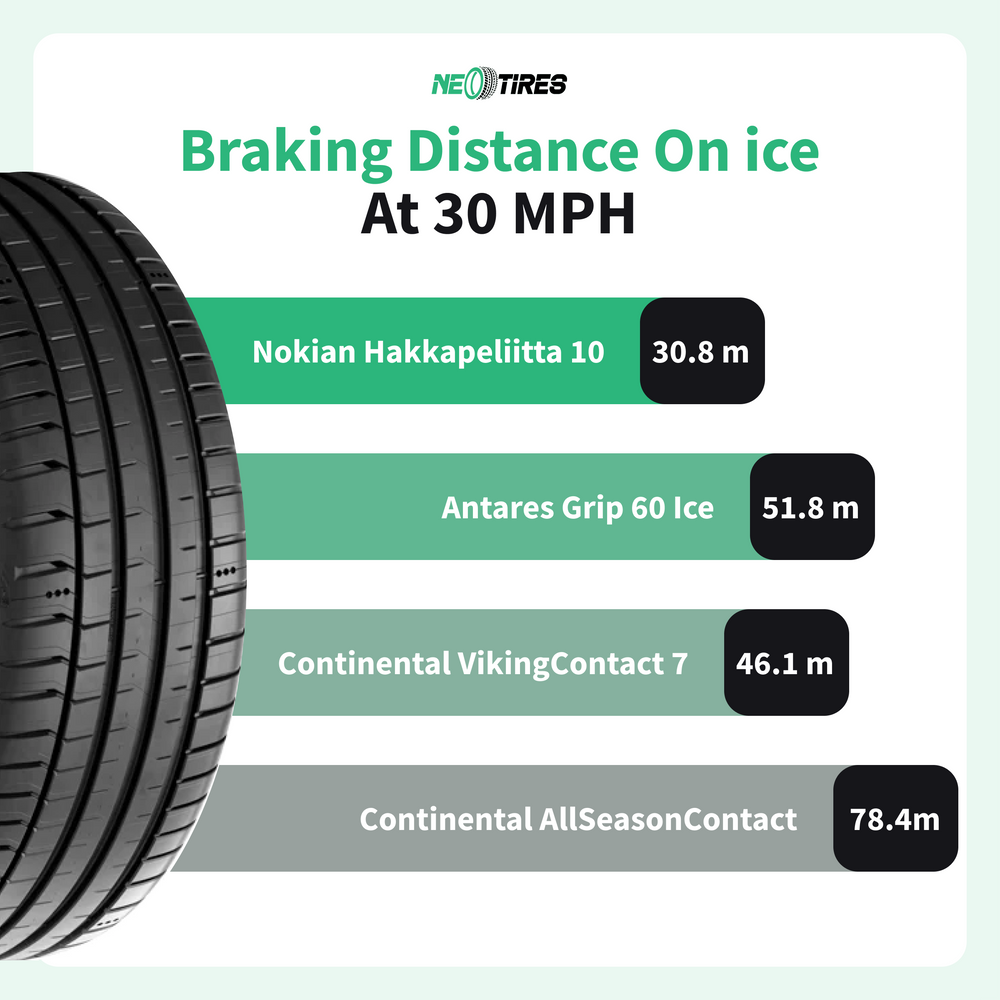
Test data shows a 48-meter difference in braking distance between the all-season Continental and the leading winter tire, the Nokian Hakkapeliitta 10. This performance gap is still significant when comparing all-season tires to budget winter options, with a 27-meter difference noted against the Antares model.
These measurements were taken at about 30 mph under controlled city driving conditions. At highway speeds of 60-90 mph, braking distances increase proportionally, possibly exceeding 60 meters on ice. This distance significantly raises the chance of collisions in traffic situations.
Although all-season tires have M+S (Mud+Snow) certification, this label only applies to light snow conditions. It does not mean the tires are suitable for ice, packed snow, or severe winter weather.
How Temperature Affects All-Season Tire Performance
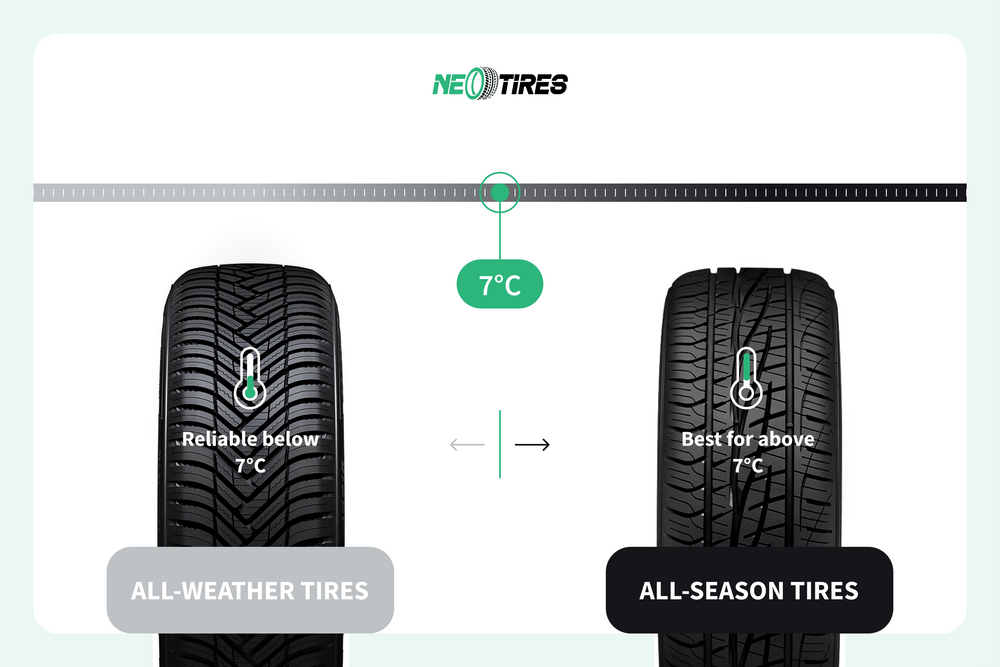
Temperature changes impact rubber compound characteristics in all-season tires, resulting in performance issues like reduced braking distance and poor handling. In extreme temperatures, the all-season tire rubber hardens, reducing grip, losing flexibility, responsiveness, and overall effectiveness. Tire hardening creates a chain reaction that weakens traction and overall vehicle control as temperatures drop below 45°F. The stiffer tire fails to adjust appropriately to road imperfections and maintain proper contact pressure.
Looking for Your Next Set Of Tires?
NeoTires can help you find the right set, regardless of size, vehicle, or driving condition. Explore our catalog to find the perfect match or tire deal, or contact us directly if you're still unsure about which type of tire is best for you: all-season, winter, or all-terrain. Our team of specialists is ready to share their tire knowledge with you and assist throughout the process.
✅ Exlore NeoTires Catalog
✅ Search for Tire Deals
✅ Contact us for guided assistance
Drive safely and choose your tires wisely!